


China’s recent discovery of vast thorium reserves could ignite a historic energy transformation. Imagine a resource powerful enough to fuel the entire country for an astounding 60,000 years—this is the promise of thorium uncovered beneath the soils of Inner Mongolia. As China gears up to harness this seemingly “limitless” energy, the world watches closely.
What Is Thorium and Why Does It Matter?
Thorium is a radioactive metal naturally found in the earth’s crust and often extracted as a byproduct of rare earth mining. Unlike uranium, which is currently dominant in nuclear power, thorium itself is not fissile—it cannot directly sustain a nuclear chain reaction. However, it’s classified as fertile material, meaning it can be converted into uranium-233, a fissile isotope, inside specialized reactors. This conversion process occurs within molten-salt reactors (MSRs), cutting edge nuclear technologies where thorium is dissolved in molten salts and heated to about 2,500°F. The resulting uranium-233 undergoes controlled nuclear fission to generate heat and ultimately electricity.
Beyond its abundance, thorium offers several compelling advantages over traditional uranium reactors. These include lower radioactive waste production, enhanced safety features that reduce meltdown risks, and more compact reactor designs. Such benefits have led experts to label thorium-based nuclear technology as a potential game-changer in clean energy.
China’s Strategic Investment in Thorium Technology
China is moving fast to capitalize on thorium’s promise. In 2023, the government approved the construction of the world’s first commercial thorium molten-salt reactor plant in the Gobi Desert. This facility, spearheaded by the Shanghai Nuclear Engineering Research and Design Institute, is slated to begin operations by 2029 with a projected output of 10 megawatts. Chinese officials have highlighted this milestone as a crucial step toward energy independence amid escalating global energy demands.
This ambition fits into China’s broader nuclear expansion strategy. Alongside developing thorium reactors, the country plans to build 24 new nuclear power plants by 2030—far outpacing many rivals in the sector. These efforts underscore China’s commitment to pioneering safer, cleaner nuclear solutions that could redefine global power dynamics.
Unveiling Thorium’s Vast Reserves in Inner Mongolia
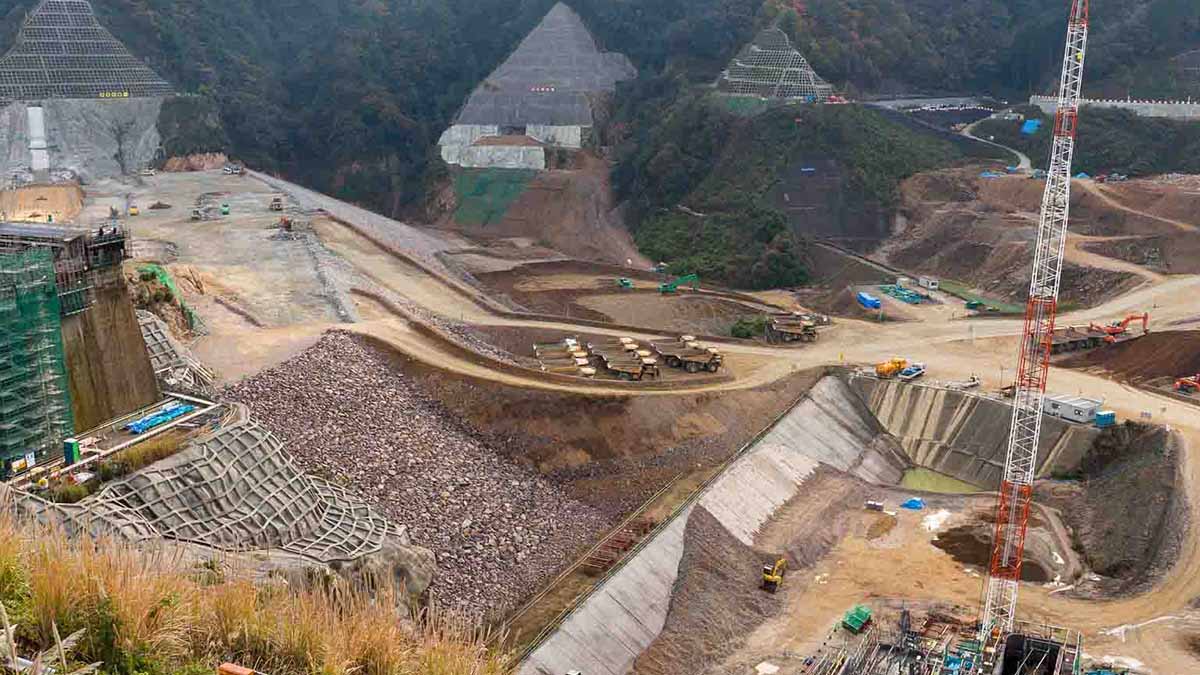
At the core of this revolution is the Bayan Obo mining complex in Inner Mongolia, which recent surveys reveal holds an unprecedented thorium bounty. According to reports from The South China Post, China now identifies 233 zones rich in thorium scattered nationwide—from the rugged landscapes of Xinjiang to coastal Guangdong.
The Bayan Obo site alone is estimated to contain about one million tonnes of thorium, enough to power China’s household energy needs for tens of thousands of years. Senior engineer Fan Honghai of the National Key Laboratory of Uranium Resource Exploration-Mining and Nuclear Remote Sensing explains that the thorium embedded in mining waste remains “totally untouched.” In fact, a striking estimate asserts that just five years’ worth of mining waste in Inner Mongolia could supply the entire U.S. household energy demand for over a thousand years.
“Utilizing these thorium-rich tailings could dramatically reduce waste and provide a sustainable energy source for generations,” said Fan Honghai in a recent briefing.
Challenges, Ambitions, and Future Prospects
Despite its vast potential, harnessing thorium energy is not without challenges. Extracting and purifying thorium consumes large amounts of acid and energy, generating significant wastewater. Moreover, while thorium itself is unsuitable for nuclear weapons, concerns about by-product security remain an ongoing subject among experts.
China’s ambitions stretch beyond just land-based power. The country recently unveiled the KUN-24AP, the world’s first thorium-powered nuclear container ship, signaling plans to expand thorium use into maritime propulsion. Additionally, Chinese researchers are investigating thorium reactors as a cornerstone for future lunar bases, linking energy innovation to space exploration.
For further scientific grounding, a 2023 study published by the International Atomic Energy Agency outlines how thorium-fueled reactors could safely and sustainably meet global energy demands while minimizing waste (IAEA report).
China’s discovery undoubtedly positions it as a global frontrunner in the thorium energy race, blending cutting-edge science with ambitious national goals. The vast reserves at Bayan Obo could rewrite the future of energy—not just for China, but potentially for the world.
What are your thoughts on thorium’s potential to address the energy crisis? Do you believe China’s approach will accelerate global adoption of cleaner nuclear power? Share your insights and join the conversation!