


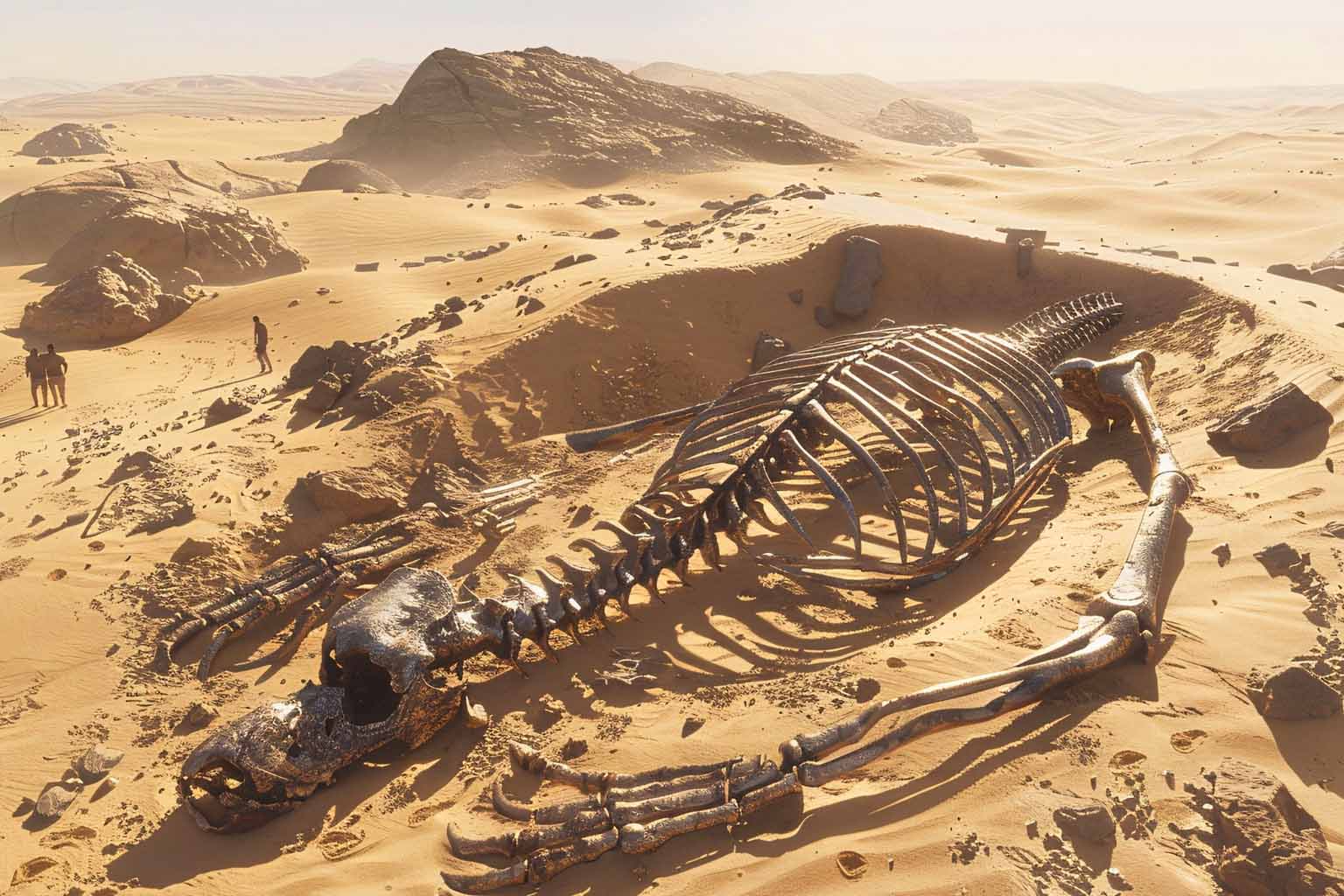
A colossal 33-foot dinosaur discovery in China has the paleontology world buzzing, promising to reshape how we understand dinosaur evolution during the Jurassic period. This extraordinary find not only broadens our knowledge of early sauropodomorphs but also uncovers clues about the diverse ecosystems thriving nearly 190 million years ago.
A Stunning Find in Southwestern China
Unearthed from the famous Lufeng Formation in Yunnan Province, the dinosaur named Xingxiulong yueorum is a giant among its early Jurassic contemporaries. Measuring about 33 feet long, this long-necked herbivore weighed several tons and stands as twice the size of its closest known relative, Xingxiulong chengi. The fossils reveal a creature that lived during a dynamic period in Earth’s history, a time when early dinosaurs were rapidly diversifying and reshaping terrestrial ecosystems.
Dr. Xiang-Yuan Chen, a lead paleontologist at the Institute of Vertebrate Paleontology and Paleoanthropology, spearheaded the research team responsible for this discovery. Their study was recently published in the journal Historical Biology, offering a detailed analysis of how such findings challenge and expand our understanding of sauropodomorph development during the Early Jurassic.
Unraveling the Dinosaur’s Unique Anatomy
What makes Xingxiulong yueorum particularly fascinating is its distinctive skeletal structure, which provides key evidence about its evolutionary path. For example, the dinosaur possesses a pendant-shaped fourth trochanter on its femur, a specific feature that differentiates it from Xingxiulong chengi. This trait, along with an astragalus bone with a nearly straight dorsal margin and a fifth pedal digit with two phalanges, sets it apart within the sauropodomorph lineage.
These anatomical details offer paleontologists compelling insights into the diversity within the Xingxiulong genus. Dr. Chen emphasizes that these small but significant differences mark a crucial evolutionary step, bridging early sauropodomorphs and their later, more massive descendants.
Early Sauropodomorphs: The Giants in the Making
Sauropodomorphs are a remarkable group of prehistoric creatures recognized as distant ancestors of the behemoth sauropods like Diplodocus and Brachiosaurus. Early in their evolution, these dinosaurs were relatively small and often bipedal. Yet, they already exhibited important characteristics—such as elongated necks and leaf-shaped teeth—that hinted at their future adaptation toward a herbivorous lifestyle and massive size.
One of the most notable evolutionary transitions was their shift from walking on two legs to four, supporting greater body mass and allowing access to taller vegetation. This adaptation was vital for survival and helped sauropodomorphs dominate Jurassic ecosystems. As experts point out, this group played a foundational role in shaping prehistoric plant-animal dynamics.
According to a Recent study published in Nature, early dinosaur giants like Xingxiulong yueorum demonstrate complex evolutionary steps towards gigantism, highlighting a multifaceted timeline rather than a simple progression.
A Deeper Look at Evolutionary Complexity
The fossil record of Xingxiulong yueorum reveals a surprising mix of primitive and derived traits that underline the complicated history of sauropodomorph evolution. Notably, the dinosaur had four sacral vertebrae—a skeletal feature common in later, more evolved sauropods. This suggests that some advanced anatomical traits developed earlier than scientists previously believed.
This complexity hints at multiple evolutionary experiments taking place during the Early Jurassic, which may have allowed sauropodomorphs to better adapt and diversify. The discovery of Xingxiulong yueorum enriches our understanding of how these dinosaurs navigated environmental pressures, competing for resources and evolving into the massive creatures that came to dominate much later.
The Lufeng Formation continues to be a treasure trove for researchers, with each new excavation revealing more pieces of the puzzle in early dinosaur evolution. The diversity of fossils found here reflects an ecosystem bustling with dynamic species interactions—a snapshot of life that offers endless intrigue to scientists worldwide.
This documentary clip explores the significance of the Xingxiulong discoveries and features insights from Dr. Xiang-Yuan Chen, highlighting the importance of the Lufeng Formation in unlocking the secrets of early Jurassic life.
Your thoughts matter—how do you think these giant prehistoric herbivores influenced the planet’s ecosystems? Share your reactions or questions in the comments below, and don’t hesitate to spread the word about this groundbreaking discovery!