


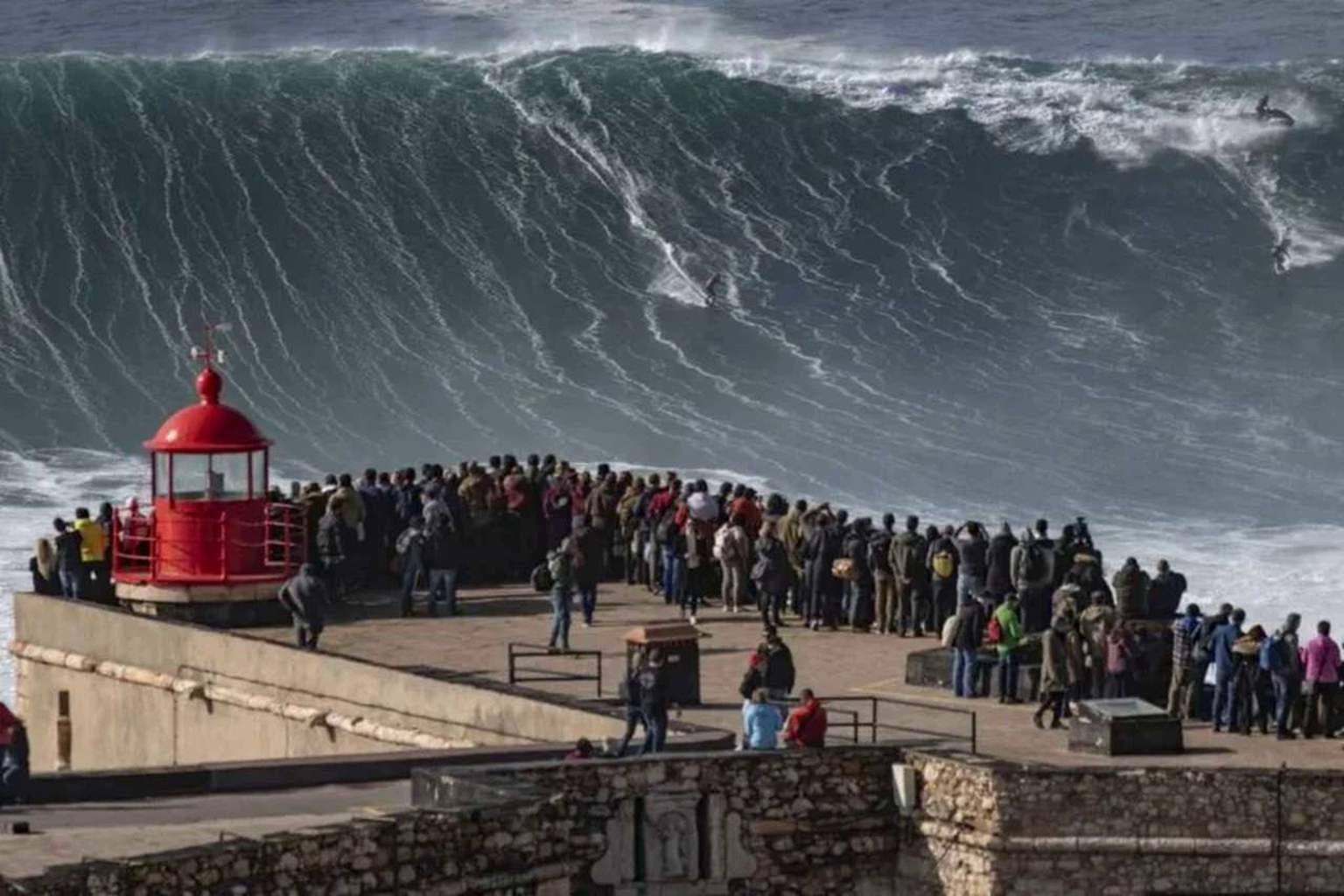
Imagine sailing along a tranquil coastline when, without warning, a monstrous wave as tall as a four-story building towers out of the blue. No storm, no tremors — just a colossal wall of water rising from the calm sea. This is the astounding reality that unfolded off the coast of Ucluelet, British Columbia, in November 2020, a moment that still puzzles ocean scientists today.
The Unbelievable Ucluelet Rogue Wave
In late 2020, a buoy run by MarineLabs recorded a rogue wave measuring an astonishing 58 feet (17.6 meters) above sea level, nearly three times the height of the surrounding waves. Rogue waves are defined by their size — at least twice as tall as the average swell nearby — but this giant wave didn’t just meet that threshold, it shattered it.
What baffles experts most is that this wave appeared during a period of calm seas and clear conditions. Two years later, physicist Johannes Gemmrich described it as “probably the most extreme rogue wave ever measured,” emphasizing its unprecedented proportionality to surrounding waves.
From Folklore to Verified Phenomenon
For generations, tales of enormous waves swallowing ships whole were dismissed as maritime myths — stories exaggerating the dangers of sea life. But the scientific landscape shifted dramatically with the 1995 Draupner wave, the first rogue wave confirmed with official measurements from an oil platform in the North Sea.
Since then, numerous rogue waves have been documented, but none quite like the Ucluelet event in terms of its sudden emergence in serene conditions and the size ratio to nearby swells. This anomaly challenges long-held mathematical models and oceanographic theories about wave formation.
The Silent Risks of Rogue Waves
The MarineLabs buoy network, which detected the wave, plays a crucial role in monitoring coastal and offshore conditions. CEO Scott Beatty underscores the importance of real-time wave data for enhancing the safety of shipping lanes, oil platforms, and increasingly common offshore wind farms.
Rogue waves are rare but pose significant threats. Historical shipwrecks, especially unexplained incidents from the 1970s, are now thought to have been caused by such freak waves. Many lost vessels show damage patterns pointing to enormous impact forces — likely from unseen, sudden walls of water.
Climate Change and Future Ocean Extremes
With the Atlantic and Pacific oceans warming due to climate change, the dynamics of wave formation are shifting. A 2020 study published by the Geophysical Research Letters warns that average wave heights in the North Pacific are expected to increase. Scientists warn this trend could lead to more frequent and even larger rogue waves, projected to be up to four times bigger than historically observed.
“As ocean temperatures rise, wave energy intensifies, creating conditions ripe for these extraordinary waves,” explained Dr. Lisa Nguyen, a coastal scientist involved with the study.
This unsettling prospect urges coastal communities, mariners, and engineers to rethink how they prepare for ocean hazards that were once considered anomalies.
Listening to the Ocean’s Warning
Reflecting on my own experiences sailing near Vancouver, I recall the deceptive calm of the water, unaware of what might be brewing beneath. The Ucluelet rogue wave serves as a stark reminder that despite centuries of ocean exploration, the sea continues to hold secrets and surprises.
Understanding these extreme wave events equips us to improve maritime safety protocols, design stronger offshore structures, and ultimately save lives.
Have you ever encountered unexpected rough seas or waves that made you stop and reconsider the power of nature? Share your story in the comments below, and if this insight into rogue waves amazed you, pass it along to friends who love the ocean’s mysteries.