


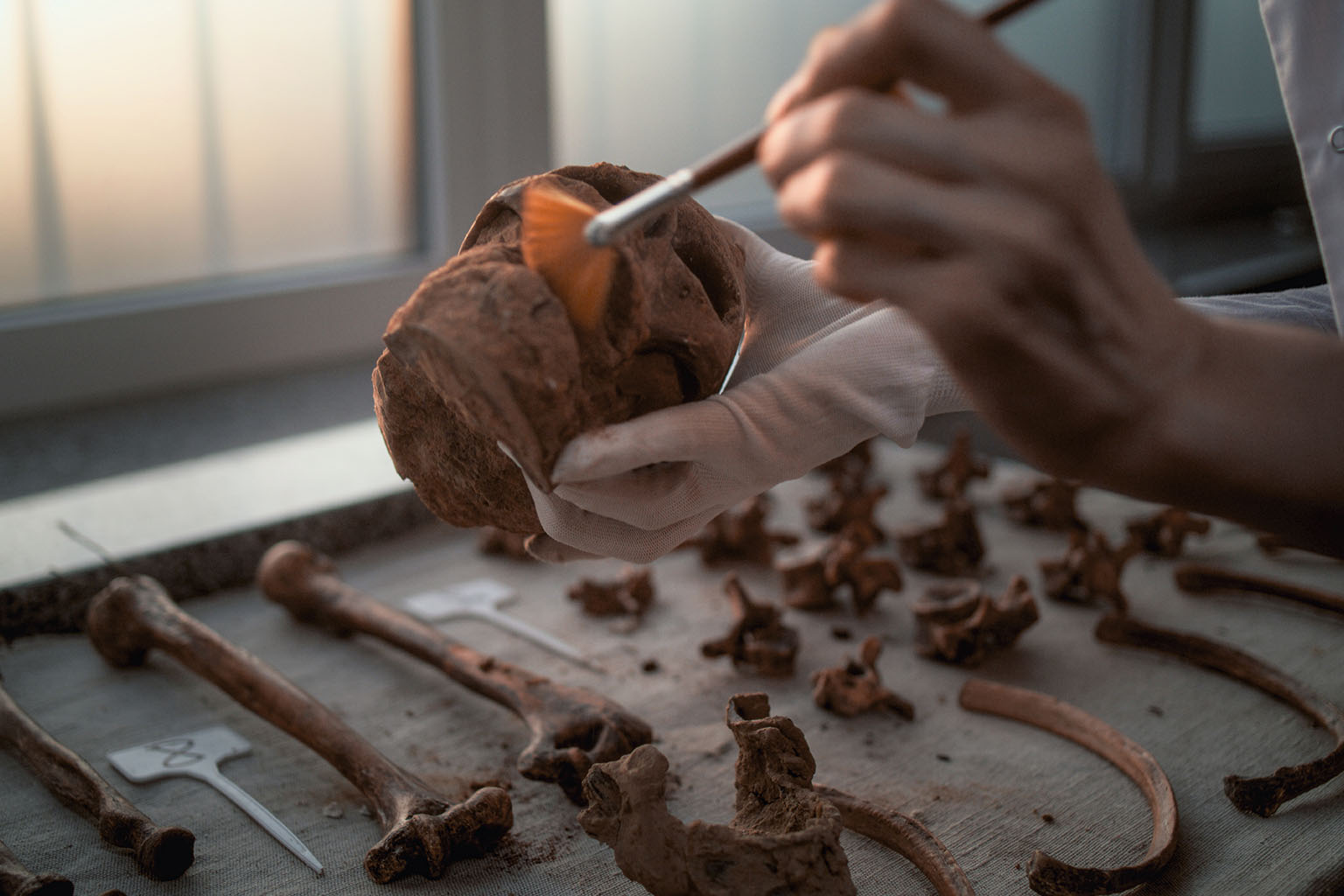
Imagine uncovering the hidden molecular secrets locked within ancient human remains—a window into the diseases, diets, and daily lives of populations long gone. Thanks to groundbreaking research from Oxford University, scientists have developed a powerful new method to extract and identify proteins from 200-year-old brain tissue, opening unprecedented opportunities to explore the health and biology of our ancestors.
A Revolutionary Technique to Unlock Ancient Proteins
Until now, much of what archaeologists could learn from human remains came from bones alone. But bones tell only part of the story, leaving out critical details about soft tissue health and invisible diseases. Researchers led by Thomas Morton-Hayward at Oxford have innovated a robust protein extraction technique that taps into preserved soft tissues like brains and muscles, revealing molecular clues long believed lost to time.
The team focused their study on brain samples excavated from Blackberry Hill Hospital cemetery in Bristol. This unique site, once a Victorian workhouse and 18th-century prison, holds remains of approximately 4,500 individuals, with about 10% retaining preserved brain tissue. Testing 10 different extraction methods, they found that using urea, a compound found in urine, proved most effective at breaking open cells to release proteins.
After extraction, the proteins were separated using liquid chromatography and identified through mass spectrometry. To boost sensitivity, the researchers added a high-tech step called FAIMS (high-field asymmetric-waveform ion mobility spectrometry), which increased protein detection by up to 40%. This multi-tiered approach allowed them to identify over 1,200 distinct proteins from just 2.5 milligrams of tissue—representing the largest and most diverse protein dataset ever recovered from archaeological soft tissue.
Watch: An informative breakdown on protein study from ancient remains by Oxford researchers.
Unlocking New Insights Beyond Bones
This leap forward opens avenues to study diseases and biological processes invisible to skeletal analysis. The team detected proteins associated with healthy brain function, as well as potential biomarkers linked to Alzheimer’s disease and multiple sclerosis. Thomas Morton-Hayward explains, “Most human diseases, including psychiatric and mental health disorders, leave no mark on bones, meaning previous archaeological studies missed this data entirely.”
Senior author Roman Fischer highlights the breakthrough’s significance, saying, “By retrieving protein biomarkers from ancient soft tissues, this workflow lets us investigate pathology beyond the skeleton. It transforms how we understand the health profiles of past populations.” This technique thereby provides a molecular view of ancient health that could reshape the study of archaeology and paleopathology.
Broad Implications for Archaeology and Beyond
The impact of this method stretches far beyond Victorian samples. It promises to revolutionize research on bog bodies, mummies, and even ancient hormones, offering a comprehensive toolkit to decode the intricate biological histories of our ancestors. These molecular insights enable scholars to reconstruct elements of diet, environment, and disease—making ancient soft tissues a treasure trove for researchers.
According to a recent study published in Scientific Reports, the integration of advanced proteomic techniques, like those employed here, significantly enhances the detection and analysis of ancient proteins, providing robust data even from highly degraded samples. This suggests that Oxford’s approach aligns with cutting-edge scientific standards and offers reliable, repeatable results for future investigations.
Why This Discovery Matters
Being able to identify thousands of proteins from tiny tissue fragments is a monumental step in archaeological science. It shifts the field beyond bones and artifacts toward a molecular-level understanding of ancient human life. By uncovering disease markers, neural proteins, and metabolic signatures, this technique enriches our knowledge of how our ancestors lived, what they suffered from, and how their bodies functioned.
Oxford’s team is redefining the boundaries of biomolecular archaeology. As we continue to unearth more preserved tissues worldwide, this method will empower scientists to paint detailed portraits of aging populations, mental health disorders, and environmental stresses that shaped human evolution. These insights build a more empathetic and scientifically grounded narrative of humanity’s past.
As Dr. Lisa Nguyen from the University of Chicago noted in her 2024 review, “Molecular archaeology allows us to access the human story in unprecedented detail, combining hard science with cultural history in ways traditional archaeology cannot.”
What do you think about these new vistas into ancient human biology? Have questions, thoughts, or insights? Share your reactions below and join the conversation about how science continues to peel back layers of history locked within our very cells.