


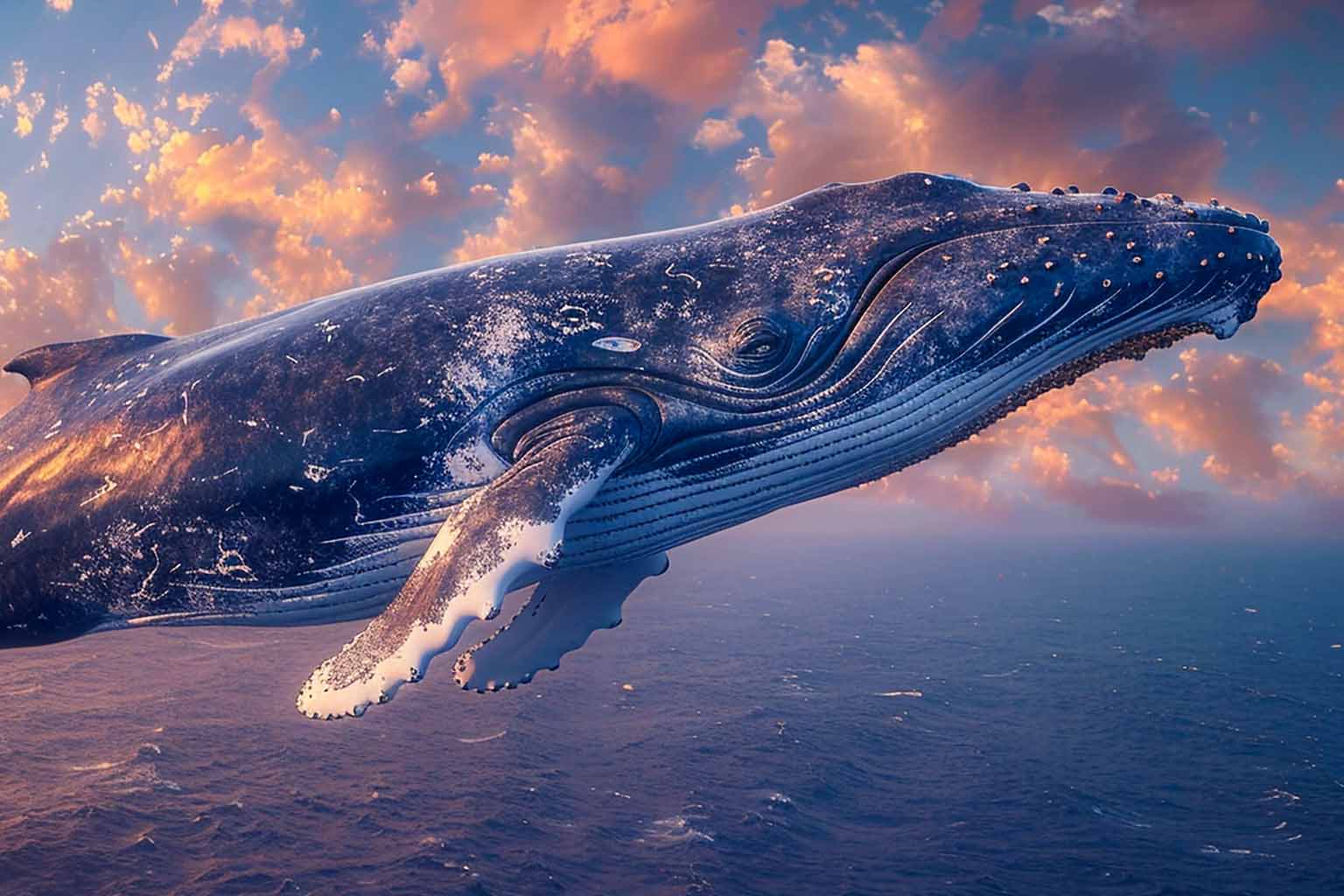
Large, grapefruit-sized eyes might seem like a ticket to stunning vision, but for humpback whales, the reality beneath the waves tells a different story. Despite their impressive eye size, these giants of the ocean navigate a blurry world, relying less on detailed sight and more on other senses to survive. Recent research dives deep into why their vision is surprisingly less sharp than ours—and what that means for their safety in waters crowded by humans.
The Myth of Sharp Vision in Giant Eyes
Humpback whales are among the most majestic creatures on Earth, with eyes about the size of a grapefruit that invite assumptions about exceptional eyesight. But new findings published in the Proceedings of the Royal Society B challenge these expectations. Researchers from Duke University and the University of North Carolina Wilmington (UNCW) examined the preserved left eye of a juvenile humpback whale to explore how these animals perceive their surroundings. What they discovered suggests that the size of an eye is not a reliable indicator of visual sharpness.
One standout anatomical feature was a notably thick sclera—the white part of the eye—at the back. This unusual thickness shortens the focal length, meaning the lens focuses images closer to the retina than expected, resulting in reduced visual sharpness. Simply put, the whale’s eyesight is less clear than a human’s despite the massive size of its eyes.
How Humpback Whale Vision Really Works
A crucial factor limiting vision is the density of retinal ganglion cells—the neurons that carry visual information to the brain. Humans boast an impressive count of up to 40,000 retinal ganglion cells per square millimeter, contributing to our sharp and colorful world. In stark contrast, humpbacks have only about 180 per square millimeter, a number that explains their low visual resolution.
Visual acuity, measured in cycles per degree (CPD), quantifies this difference: the juvenile humpback’s visual acuity was approximately 3.95 CPD, whereas humans typically range between 60 and 100 CPD. This means humpbacks can detect broad shapes but miss finer details, especially at distances beyond their immediate vicinity.
Computer simulations based on anatomical data show that humpbacks can recognize large, basic shapes like schools of fish from afar. However, they must get within roughly 150 to 200 feet (about three to four body lengths) before smaller textures or details become discernible. This range firmly classifies humpbacks as nearsighted within their oceanic environment.
Why Limited Vision Matters for Whale Safety
Understanding humpback whale vision isn’t just a matter of curiosity—it has real-world implications, especially given the increasing overlap between whales and human activities.
A major concern is the frequent entanglement in fishing gear, a dangerous threat linked directly to the whales’ inability to spot nets and traps from a safe distance. The poor visual acuity means that whales often encounter fishing equipment too late to avoid it, increasing the likelihood of injury or death.
Thomas Cronin, a visual ecologist at the University of Maryland, Baltimore County, who was not involved in the study, explains, “While low CPD values would be detrimental for humans, whales do not require sharp vision to hunt and survive.” This insight highlights how evolutionary pressures shaped their sensory needs, favoring adaptations other than fine detail vision in their aquatic niche.
Experts also caution that the study’s results could slightly overestimate actual whale vision. Elena Vecino Cordero, a biologist from the University of the Basque Country, noted that the long storage of the eye specimen might have altered its tissue properties, potentially affecting measurements.
Conservation Efforts and Future Directions
The researchers behind this work emphasize its importance for conservation. By understanding exactly how humpbacks see the world, we can design fishing gear and marine equipment that are more visible or detectable to them, potentially reducing harmful encounters.
This research paves the way for safer fishing practices, such as net designs that stand out more clearly to humpback whales before they get too close. Bridging the gap between human technology and whale sensory capabilities offers hope for reducing whale entanglements and supporting these iconic marine mammals’ survival.
Lori Schweikert, assistant professor of biology and marine biology at UNCW, summed it up in a press release: “This work helps fill a major gap in our understanding of the sensory ecology of large whales [and] how humpbacks experience their world.” It is a reminder that sight, while valuable, is only part of the picture for these animals, which likely rely heavily on other senses such as echolocation and touch.
This video offers a compelling look at how researchers unlock the secrets of whale vision and behavior, connecting scientific discovery with conservation efforts.
According to a recent study published in the Proceedings of the Royal Society B, the findings discussed here represent a breakthrough in understanding marine mammal sensory biology with potential to inform policy and conservation measures worldwide.
If you found this insight into humpback whale vision fascinating, share your thoughts or questions below. How do you think humans can better protect marine life, considering their unique sensory worlds? Join the conversation!