


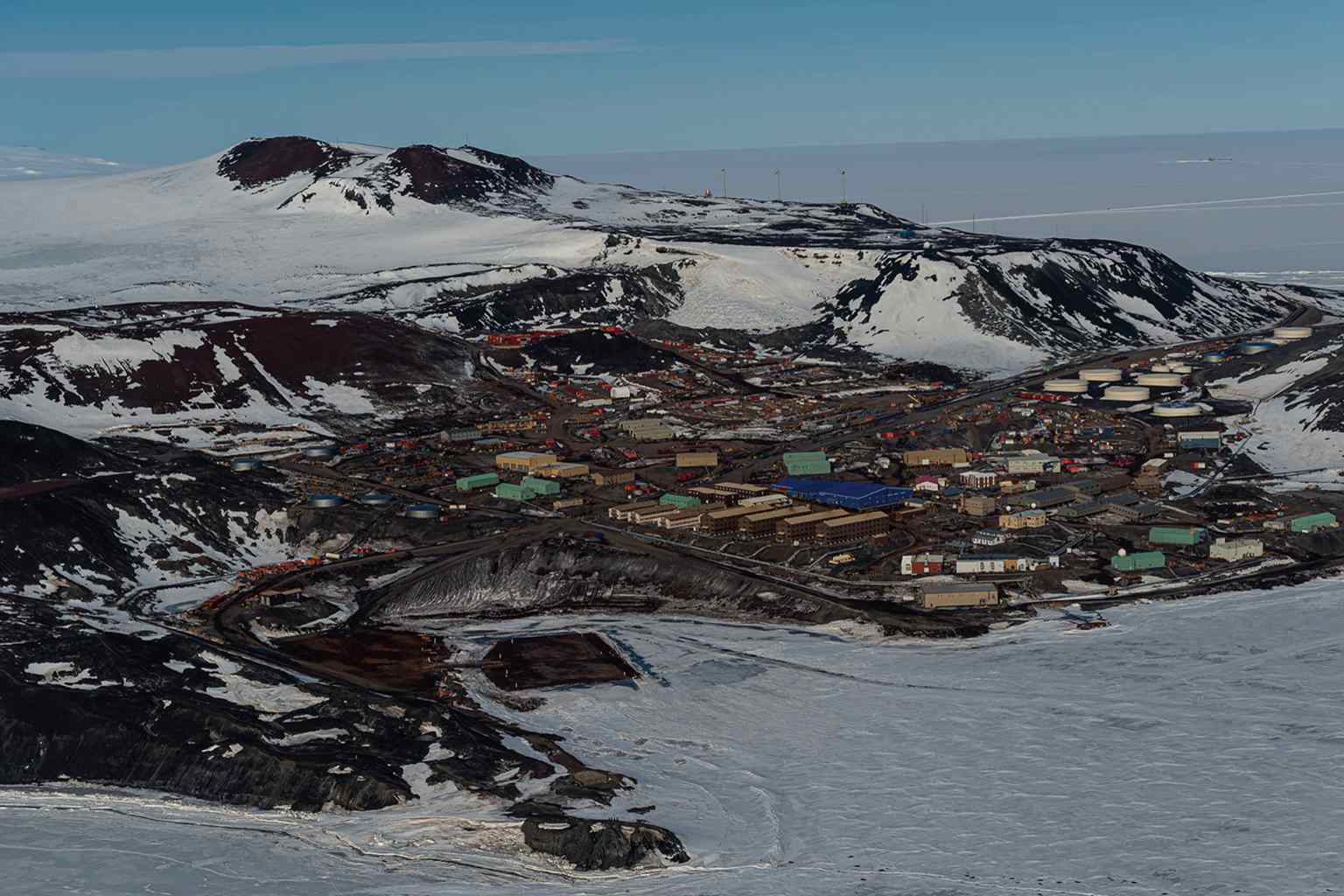
Beneath nearly 1.2 miles of thick Antarctic ice lies a prehistoric landscape frozen in time, hidden away from sight for over 34 million years. Thanks to cutting-edge satellite technology, scientists have uncovered an ancient world beneath the ice, revealing a breathtaking glimpse of a time when Antarctica was lush, vibrant, and radically different from the frozen desert we know today.
This incredible discovery not only rewrites our understanding of Antarctica’s past but also offers vital clues to how Earth’s climate and landscapes have evolved over millions of years.
Unlocking Antarctica’s lost world with satellite technology
The expedition was led by Stewart Jamieson, a renowned glaciologist at Durham University, who, together with a team of international researchers, used data from the Canadian RADARSAT satellite system. This advanced remote sensing technology detects subtle deformations on the ice surface, allowing them to map the terrain hidden beneath the vast East Antarctic Ice Sheet with remarkable precision.
By combining this data with airborne radio-echo sounding surveys, the team uncovered a sprawling landscape featuring ancient river valleys and mountain ranges, spanning an area roughly the size of Wales. These features have been perfectly preserved beneath the ice since before the sheet formed some 34 million years ago.
“It’s like opening a frozen time capsule,” Jamieson said. Instead of an icy wasteland, the buried terrain once supported flowing rivers and dense forests during the days of the supercontinent Gondwana when dinosaurs roamed this now-frozen wilderness.
The science behind the discovery: geology meets cutting-edge technology
This feat was made possible by integrating satellite imagery with advanced geophysical methods. RADARSAT’s ability to observe faint surface irregularities in the ice sheet is crucial because these subtle anomalies correspond to the shape of the bedrock underneath.
Beyond mapping, the research team applied flexural modeling, a technique that simulates how ancient landscape features responded to glacial loading and erosion. This provides insight into the dynamic history of the East Antarctic Ice Sheet’s formation, how the ice’s weight reshaped the land, and how river valleys and mountains evolved before glaciation took hold.
According to a recent study published in Nature Communications by Jamieson and colleagues, these findings reveal that Antarctica’s buried landscape is more complex than previously thought, reflecting dramatic climatic shifts dating back millions of years.
“Decoding this hidden terrain helps us better understand ice sheet stability and long-term climate interactions, which are critical for predicting future environmental changes.” — Stewart Jamieson, Durham University
Ancient Antarctica’s lessons for today’s climate challenges
The importance of this discovery goes beyond simply uncovering an ancient world. Studying how the East Antarctic Ice Sheet waxed and waned in response to past climate fluctuations gives scientists crucial data for today’s climate models. The ice sheet has retreated during several past warm periods, such as the mid-Pliocene warm period and Pleistocene interglacials, providing a natural laboratory for understanding ice dynamics and sea-level rise risks.
Parts of Antarctica are still vulnerable. With rising global temperatures, marine-based sectors of the ice sheet could experience accelerated thinning or retreat. This would contribute to global sea level rise, posing a major threat to coastal cities worldwide.
Jamieson’s research urges ongoing monitoring and refined modeling of ice sheet behavior to predict future changes more reliably. Understanding how ancient river systems and landscapes shaped the ice sheet’s response to warming periods helps frame how this fragile ecosystem might evolve.
Why this discovery matters to all of us
Unveiling a world hidden beneath miles of ice reminds us of how much of Earth’s history remains buried and unexplored. It’s a potent reminder that our planet’s story is vast and complex, with ancient climatic shifts holding vital clues to our environmental future.
This breakthrough resonates with expert climatologists and geologists alike as it bridges past and future, deepening our understanding of ice sheet stability, climate resilience, and vulnerability.
What lies beneath Antarctica is not just frozen ground but a narrative of change, endurance, and transformation.
Personally, as a seasoned editor covering scientific breakthroughs, I find this discovery profoundly humbling. It calls on us to appreciate Earth’s delicate past while thoughtfully preparing to meet the challenges ahead.
Have you ever imagined what secrets might lie beneath the ice in places so remote? What does this discovery tell you about our planet’s resilience? Share your impressions and questions below—let’s explore Earth’s remarkable mysteries together. And don’t forget to share this story with friends. The frozen frontiers of Antarctica have powerful stories still waiting to be told.