


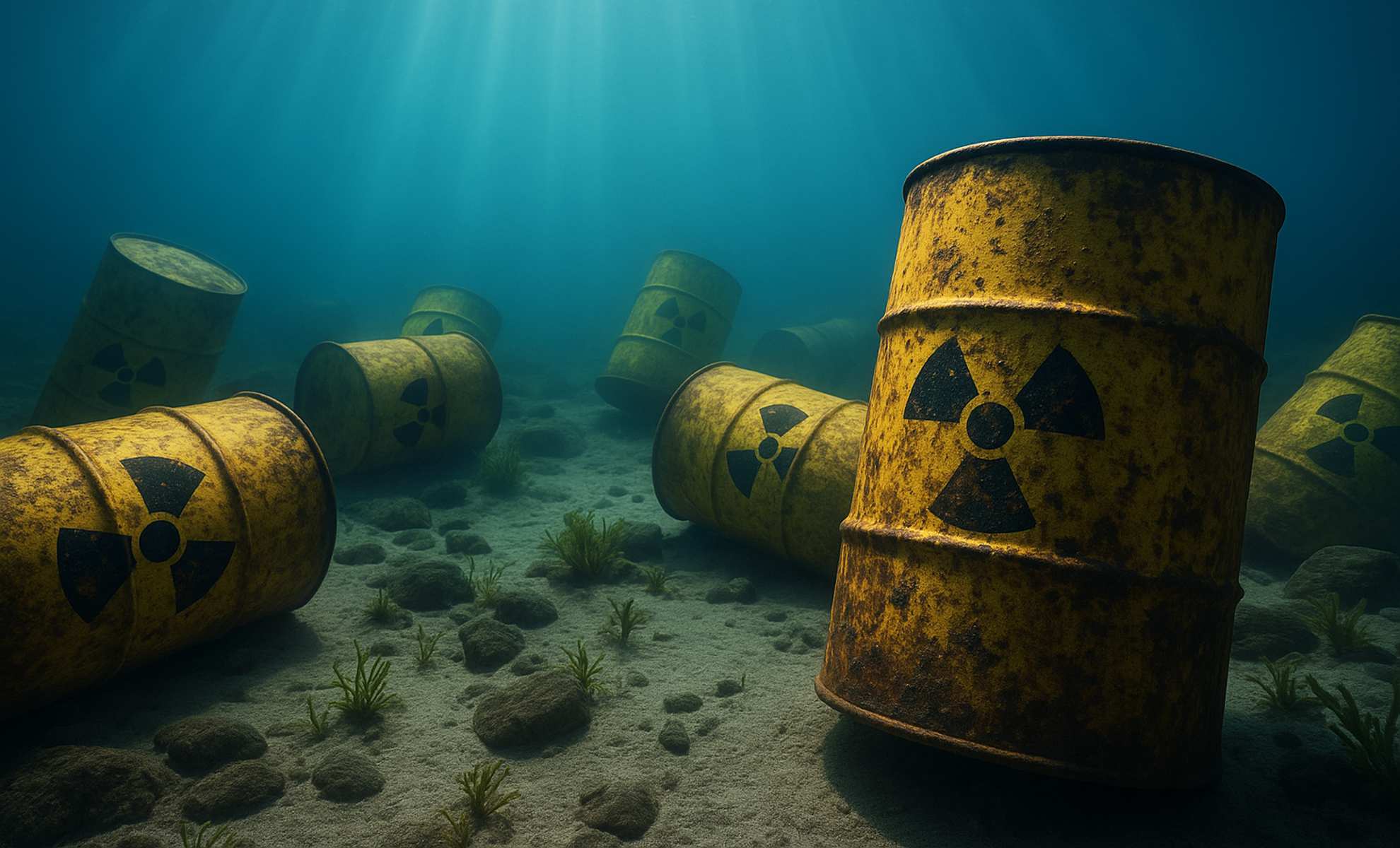
Imagine over 200,000 barrels packed with radioactive waste lying deep beneath the Atlantic Ocean, lost to time and largely forgotten. For decades, these barrels have rested silently on the ocean floor, their impact on marine life and ecosystems remaining a haunting mystery. Now, a team of scientists is gearing up for an ambitious mission to map these barrels with precision, shining a spotlight on one of the ocean’s darkest legacies.
Between 1946 and 1990, the disposal of radioactive waste became a routine practice, with barrels encased in asphalt and concrete dumped thousands of feet underwater. While once considered a viable solution to a pressing problem, this method has long been banned, yet the barrels remain where they were left. What do these hidden relics mean for the ocean’s health today? That’s the question driving this pioneering effort.
Tracing the Hidden Legacy of Radioactive Waste
The release of over 200,000 barrels of radioactive waste into the Atlantic Ocean was a solution born in a different era. Following the rise of nuclear technology in the late 1940s, governments grappled with the challenge of storing and isolating radioactive materials safely. At the time, the ocean’s vast, remote depths—often dropping to 13,000 feet (4,000 meters) or more—seemed an ideal, lifeless dump zone.
According to international treaties like the London Convention of 1990, dumping radioactive waste at sea was banned, acknowledging the potential long-term dangers. But after the last barrels were sunk, their exact condition and ecological impact remained undocumented. This gap in knowledge has raised concerns among scientists and environmentalists alike: Have these barrels corroded? Are radioactive contaminants leaching into the water? What does this mean for the intricate web of marine life that thrives even in deep ocean ecosystems?
A multi-disciplinary team from institutions including the CNRS and Ifremer is ready to answer these questions. Using cutting-edge technology, their mission focuses first on mapping the precise locations of these submerged barrels, covering a sprawling 2,300 square miles (6,000 square kilometers) of abyssal plains.
Advanced Technologies Leading the Way
Modern exploration tools are at the heart of this project. High-resolution sonar systems will scan the seafloor in painstaking detail, revealing the shape and distribution of the barrels over a broad area. Complementing this, the autonomous submarine UlyX, specially designed to operate at extreme depths, will provide in situ observations and collect environmental data.
Every sample of sediment, seawater, and marine organisms gathered around these sites will help scientists assess any biological or chemical changes. This technology-driven approach aims to build an accurate environmental risk profile for these radioactive deposits—a crucial step for future marine conservation strategies.
Dr. Anne Martin, lead oceanographer with the initiative, explains, “Mapping and understanding the interaction between these barrels and their environment is essential. We need to know if radioactive materials have migrated beyond the barrels and how marine species might be affected.”
This mission not only embodies technological innovation but also international scientific cooperation. Collectively, experts hope the insights gained will guide policy and remediation efforts for nuclear waste management worldwide.
Assessing the Impact on Marine Ecosystems
Contrary to popular belief, the ocean’s depths are not devoid of life. Current research has unveiled rich and complex ecosystems thriving even kilometers beneath the surface. As such, the buried radioactive barrels pose a potential threat far greater than once imagined.
Marine biologists worry about bioaccumulation—the process by which radioactive substances enter the food chain and magnify through marine life. The long-term ecological damage could reverberate up through fish, sharks, and migratory species, impacting not just ocean health but also fisheries and human communities relying on seafood.
The United Nations’ Intergovernmental Oceanographic Commission has emphasized the importance of such investigations, calling for rigorous assessments of deep-sea environmental risks. According to a 2023 report by the United Nations Environment Programme, “Without detailed mapping and scientific inquiry into past disposal sites, global marine ecosystem management remains incomplete.”
The Nodssum project’s upcoming surveys will be crucial, as they are set to collect data never before available on these lingering radioactive deposits.
Looking Ahead: Responsibility Under the Waves
This mission is more than an academic exercise—it’s a step toward accountability and stewardship of our oceans. Our history with radioactive waste disposal underscores the importance of foresight and precaution in environmental decisions.
Reflecting on these practices reveals the unintended consequences of short-term solutions on long-term ecological health. As technologies like UlyX and sonar mapping evolve, they not only help us understand past mistakes but also empower us to prevent future ones.
For the general public and policymakers alike, this initiative highlights a crucial message: protecting the ocean demands vigilance and collaboration. It serves as a reminder that the ocean floor isn’t a dumping ground, and that even the remotest corners of our planet deserve thoughtful care.
Oceanographer Dr. Lisa Nguyen, featured in a recent National Geographic documentary, notes: “These submerged barrels are silent witnesses to a time when nuclear waste was less understood. Our job now is to listen carefully, learn responsibly, and act decisively to safeguard marine environments for future generations.”
As the Nodssum mission moves forward, monitoring results will be critical for shaping international environmental policies and for raising awareness about the consequences of human activity in oceans.
What do you think about this deep-sea expedition? Can science and technology help us repair the ocean’s wounds? Join the conversation—share your thoughts and questions below, and let’s explore together how we can protect this vital part of our planet.