


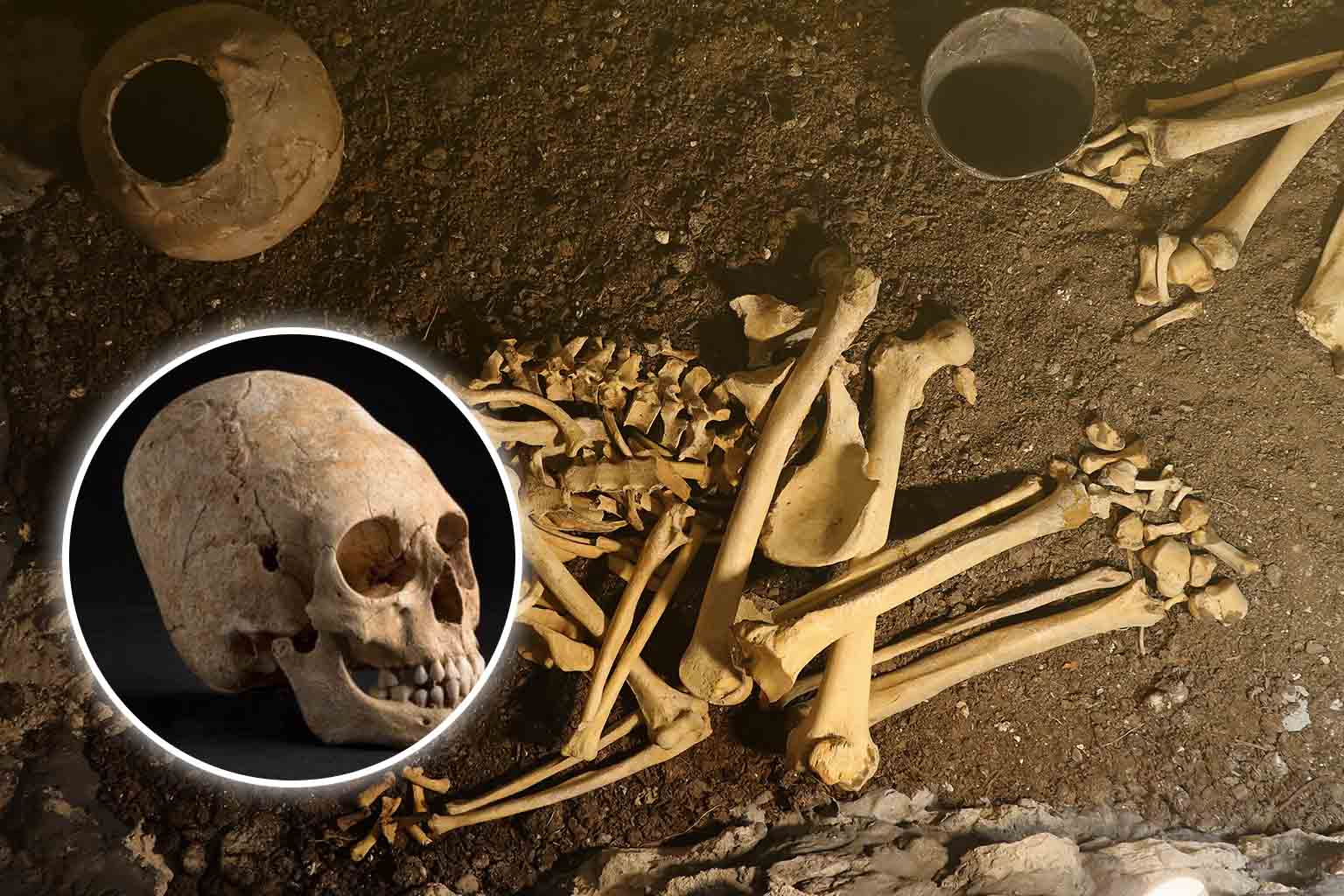
Unearthing the past can reveal startling truths that stretch across millennia. The discovery of a 6,200-year-old girl’s skull in western Iran is shedding new light on ancient cranial modification practices, cultural identity, and the risks hidden within age-old rituals. This find, from the cemetery site of Chega Sofla, offers an intimate glimpse into a life shaped—and ultimately ended—by this extraordinary tradition.
Ancient cranial modification: more than just a cultural symbol
The young girl’s skull clearly bears the marks of intentional cranial modification, a practice seen in many early societies worldwide. By binding the heads of infants and children, ancient peoples deliberately altered the natural shape of the skull to create distinctive forms. In this case, the girl’s skull was transformed into a cone-shaped deformation, a common result when tightly bandaged from an early age.
This process, often reserved for girls in multiple cultures, was not merely aesthetic. Cranial deformation served as a marker of social status, religious affiliation, or ethnic identity, symbolizing belonging to particular groups or traditions. The modifications physically inscribed cultural stories onto the body, binding individual appearance to collective customs.
Researchers from the team that made this discovery, featured in the International Journal of Osteoarchaeology, point out how such findings deepen our understanding of the link between body modification and social organization dating back thousands of years.
Chega Sofla graves: a window into 6,000-year-old life and death
Located in western Iran, the Chega Sofla cemetery is a treasure trove of information about ancient burial practices and social structures. Excavations have uncovered not only the girl’s remains but also other communal graves and the oldest brick tomb ever found, providing invaluable archaeological context. The site, worked on for over a decade, reveals a complex picture of how early societies honored their dead.
Interestingly, some graves show signs of cranial modification, while others include unique burial customs, emphasizing cultural diversity even within this single community. This makes Chega Sofla a crucial resource for piecing together how ancient Iranians lived, died, and defined identity through ritual.
The tragic blow: how the girl’s fatal injury tells a deeper story
Perhaps the most compelling part of the discovery is the brutal injury that ended the girl’s life. CT scanning technology revealed a severe fracture running from the front of her skull to the back, with no evidence of healing. This implies the injury happened shortly before death, an impact she could not survive.
Experts believe the wound was caused by a blunt, broad-edged weapon, possibly wielded by another person. Due to the previous cranial modification work, the skull bone was thinner, reducing its ability to absorb the force of the strike. Such vulnerability likely made her more susceptible to fatal brain trauma.
This finding sheds light on the darker consequences of altering the human body for cultural reasons, complicating the narrative of ancient practices by revealing their physical hazards.
The physical cost of cultural identity: thinning of the skull
The study emphasizes the anatomical changes resulting from intentional cranial deformation. The girl’s skull exhibited significant thinning, a condition confirmed through CT imaging that demonstrated reduced bone density and strength. While these alterations served profound cultural purposes, they had unintended side effects.
This scientific evidence underscores how rituals, while meaningful socially and symbolically, could also increase physical vulnerability, especially to injuries like the fatal blow sustained by the girl. It highlights a delicate balance between cultural expression and biological risk in human history.
Dr. Lisa Nguyen, a physical anthropologist, explained in a 2024 study how “altering skull shape can change biomechanical properties, often making bones less resilient to trauma,” illustrating this tension between culture and survival.
This educational video further explores how ancient societies used body modification to express identity and how these practices physically affected individuals.
The Chega Sofla find not only enriches historical knowledge but also offers a poignant story about the risks involved in ancient cultural practices. The young girl’s life and untimely death remind us of the profound human dimensions behind archaeological discoveries.
If this story moved you or sparked new questions, share your thoughts or experiences in the comments below. Your insights help bring these ancient lives and their stories back to life.