


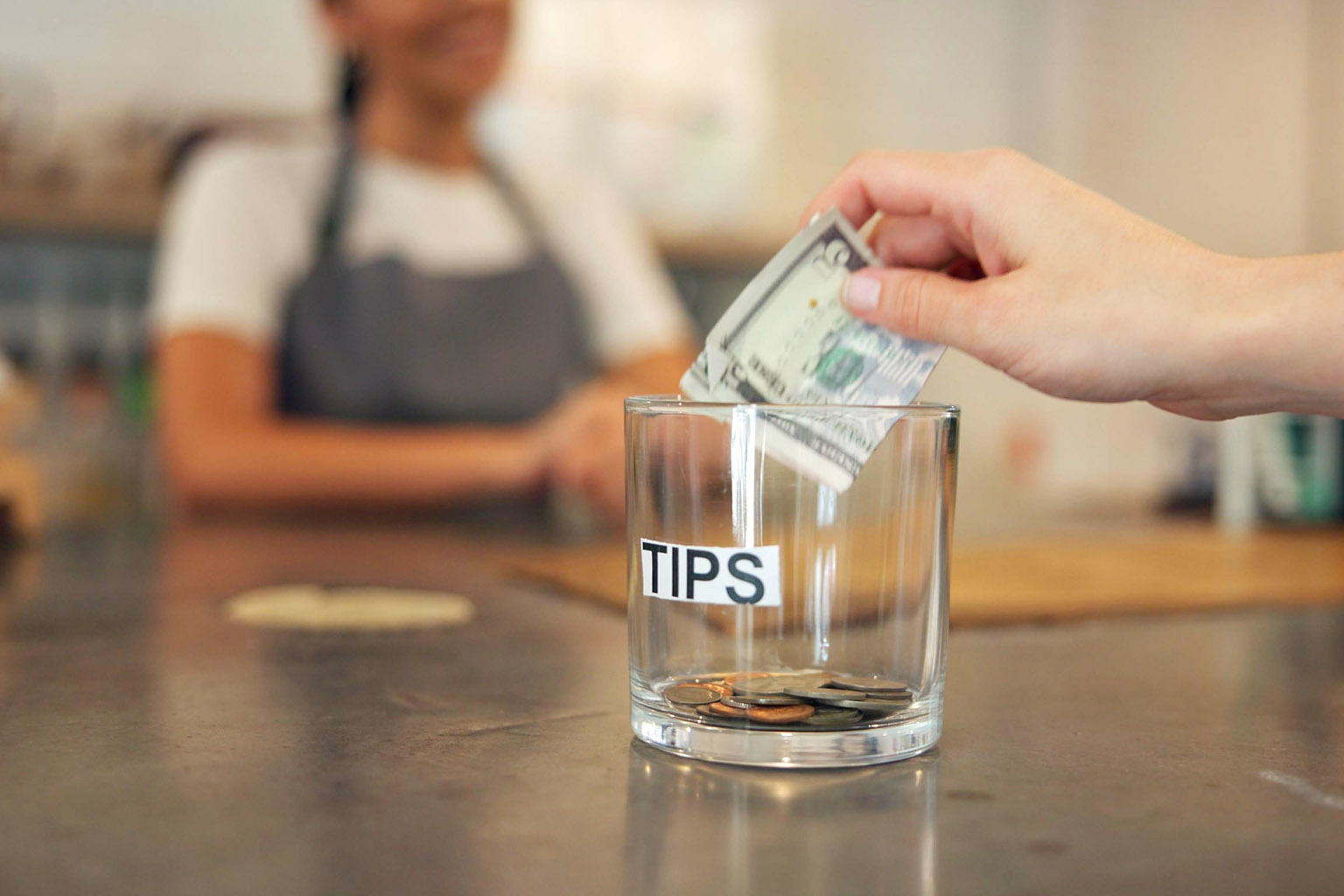
Are you unknowingly throwing away money on tips? New research reveals surprising truths about this widespread custom that shapes billions of dollars of spending annually in the U.S.
Tipping is often seen as a straightforward way to reward good service. But a recent study by Dr. Ran Snitkovsky from Tel Aviv University and Prof. Laurens Debo of Dartmouth College challenges this assumption, revealing how complex social and psychological forces shape tipping behavior. Their work shows that tipping may not be as economically rational—or as effective—as many believe.
Why tipping doesn’t fit traditional economic logic
At first glance, tipping seems economically irrational. “The classical economic model assumes people act in self-interest and wouldn’t tip after receiving a service,” says Dr. Snitkovsky, co-author of the paper published in Management Science. “For example, why tip a taxi driver in New York when chances are slim you’ll ever see them again, and you get no direct future benefit?”
This puzzling phenomenon defies conventional theories that tipping incentivizes better future service or higher current effort. “If self-interest ruled, customers would hope others tip to maintain service standards while avoiding tipping themselves,” Snitkovsky explains. Instead, psychological factors—like gratitude and social norms—offer a clearer explanation.
The social dynamics behind tipping: appreciators and conformists
Using tools from game theory and behavioral economics, the researchers developed a model distinguishing two groups of tippers: “appreciators,” who tip based on genuine gratitude, and “conformists,” who tip primarily because others do.
“This dynamic explains an important trend,” Dr. Snitkovsky notes. “In societies with strong social pressure, tipping rates rise over time, as conformists match the higher baseline set by appreciators.” This feedback loop helps explain why average tipping in the U.S. rose from around 10% several decades ago to nearly 20% today.
According to a USA Today report, Americans spend nearly $500 annually on tips at restaurants and bars, contributing to a $50 billion tipping economy. These numbers make understanding tipping behavior crucial for consumers, workers, and businesses alike.
Interestingly, the researchers suggest that rising tipping rates may also reflect broader economic inequality trends. Professor Yoram Margalioth of Tel Aviv University, collaborating on related work, argues that economic disparities exert pressure on tipping norms—an insight supported by their model’s predictions.
Does tipping improve service? A limited incentive effect
So, does all this tipping actually lead to better service? The study shows the answer isn’t straightforward. While tips can encourage servers to work harder, the presence of many conformists dilutes this effect.
“If servers know most customers tip a standard amount no matter what, there’s little motivation to go beyond the minimum effort,” says Snitkovsky. Conversely, in a hypothetical world of entirely appreciators, tipping could serve as a much stronger incentive. But then businesses might raise base prices, knowing customers value the enhanced experience—potentially offsetting tip percentages.
The “tip credit” system in many U.S. states adds another layer. This law permits employers to pay tipped workers below minimum wage, using tips to “make up the difference.” Snitkovsky’s work shows this boosts economic efficiency by lowering prices and increasing customers served—but often at a cost to servers, who effectively subsidize their own wages through tips.
Beyond economics: ethical and social issues with tipping
Dr. Snitkovsky candidly shares his personal view: “I dislike tipping because it places an unfair burden on customers and can perpetuate unethical behaviors.”
Research has highlighted unsettling aspects of tipping culture. Studies reveal tipping can encourage sexist dynamics, with female servers often feeling pressured to tolerate inappropriate behavior to protect their income. Other research indicates racial bias influences tipping amounts, with customers favoring servers of their own ethnicity—a deeply troubling implication.
Despite its flaws, tipping also has positive aspects. It enables customers willing to pay more for superior service to help subsidize others, creating a unique community-driven quality control. Additionally, tips do provide some motivation for servers, even if that incentive is limited.
In today’s digital age, modern tools provide alternative ways to evaluate service quality. Online reviews, customer ratings, and surveillance technologies can offer more objective, transparent measures than an unpredictable tipping system.
For a broader perspective on tipping, check out this insightful video exploring the economics and psychology of tipping that complements the study’s findings:
As behavioral economist Dr. Lisa Nguyen notes:
“Tipping exemplifies how human behavior often transcends simple economic rationality, blending emotion, social expectation, and ethics.”
Understanding these complexities will help consumers make more informed decisions, workers advocate for fair treatment, and businesses rethink service incentives.
How do you feel about tipping? Do you believe it truly reflects good service, or do social pressures drive the custom more than appreciation? Share your thoughts, stories, and reactions below. Join the conversation and help shape how we think about tipping in the future. Your experience matters.