


As the crisp air of autumn settles in, many gardeners face the challenge of preserving their beloved herbs before the first frost. But what if you could enjoy fresh, fragrant rosemary throughout the year without ever worrying about cold snaps? Growing rosemary indoors is a delightful solution that keeps this aromatic Mediterranean herb within arm’s reach, fresh and flourishing no matter the season.
Known for its distinctive woody, piney flavor, rosemary (Salvia rosmarinus) is a staple in kitchens everywhere, perfect for seasoning chicken, roasted potatoes, and flavorful casseroles. With the right approach, you can cultivate a thriving rosemary plant on your windowsill or countertop, ensuring a continuous supply to enhance your cooking and bring a touch of greenery into your home.
Does rosemary grow well indoors?
Rosemary is traditionally grown as a hardy, woody shrub in gardens, reaching heights of up to 6 feet outdoors. It thrives outdoors in USDA Zones 8 through 11 but struggles with colder climates. Gardeners living in cooler zones often find themselves needing to bring rosemary indoors during the winter or treat it as an annual that needs replanting each year.
Fortunately, rosemary adapts surprisingly well to indoor life, provided its essential needs are met. This herb demands bright, direct sunlight, well-draining soil, and good airflow—the combination that replicates its native Mediterranean environment. When grown inside, rosemary stays compact and manageable, making it an ideal container plant for kitchens, sunrooms, or brightly lit living spaces.
Experts at the University of Minnesota Extension emphasize that successfully growing rosemary indoors hinges on maintaining strong, consistent lighting and moderate humidity levels. Their research supports the idea that with proper care, rosemary can thrive in your home year-round.
Choosing the perfect pot for your indoor rosemary
The right container can make or break your indoor rosemary’s success. Since rosemary prefers dry, well-ventilated roots, choose a pot with ample drainage holes to prevent water from pooling at the bottom. Terracotta pots are especially beneficial because their porous nature allows excess moisture to evaporate, keeping the root environment healthy.
Start with a pot just a bit larger than the plant’s current root ball—typically an 8-inch diameter container works well. As your rosemary grows, look for signs it’s ready to be repotted, such as roots showing through holes or doubling in size. Moving up a pot size ensures the plant has room to expand without becoming root-bound.
This potting strategy mirrors rosemary’s natural habitat, where rocky, sandy soils provide ideal drainage and air circulation, preventing issues like root rot.
Sunlight, watering, and soil essentials for indoor rosemary
One major hurdle for indoor rosemary growers is meeting the herb’s high light requirements. Rosemary thrives with at least six hours of direct sunlight daily. Position your plant in a south- or east-facing window to maximize natural light. When sunlight is limited, especially during winter months, supplement with a full-spectrum LED grow light. These lights emit the precise wavelengths rosemary needs for photosynthesis without damaging delicate leaves.
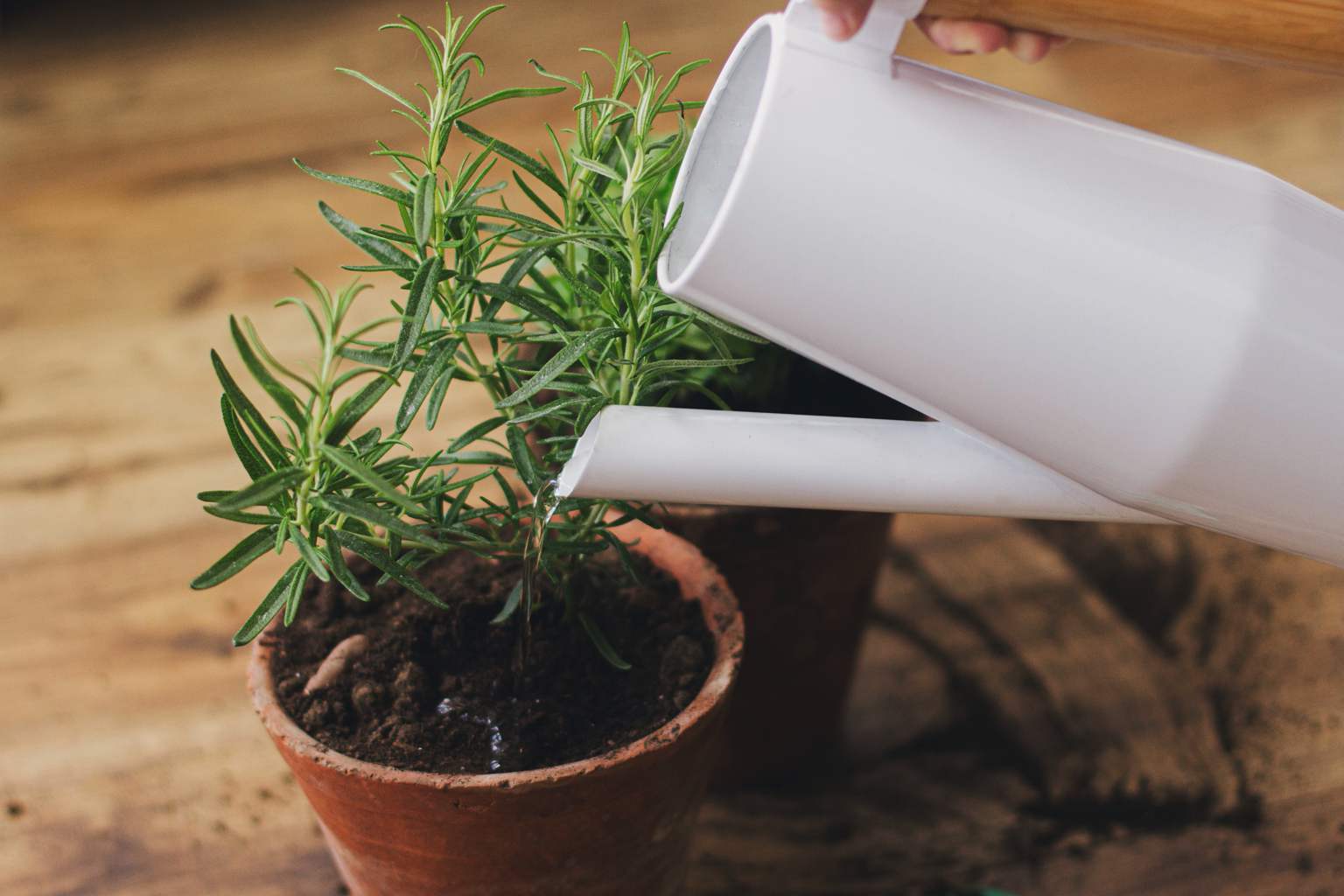
Watering this herb indoors requires a careful balance. Unlike many houseplants, rosemary resents soggy soil and is prone to root rot if overwatered. Allow the top 1 to 2 inches of soil to dry out before watering thoroughly. When you water, soak the soil until excess drains from the pot’s bottom—this promotes deep root growth. To boost humidity, frequently mist the foliage between waterings, as rosemary also absorbs moisture through its leaves.
Choosing the right soil is equally critical. Opt for sandy, loamy soil with fast drainage—cactus soil is a great choice—or amend standard potting mix with coarse sand or perlite. The soil pH should be slightly acidic, ideally between 6.5 and 7.0, to emulate the Mediterranean environment rosemary thrives in.
Maintaining the right temperature, humidity, and fertilization
Rosemary prefers indoor daytime temperatures between 60 and 75°F, with a nighttime drop of about 10 degrees to mimic natural conditions. Avoid placing your plant near heating vents, air conditioners, or drafty doors—these can stress the herb by drying out the leaves or chilling its roots.
To maintain the ideal humidity level, set your rosemary pot on a tray filled with water and pebbles so evaporating water adds moisture to the air. Alternatively, a home humidifier can help sustain a balanced atmosphere, especially in dry winter conditions.
In terms of nourishment, apply a slow-release fertilizer or organic compost twice yearly—in spring and mid-summer—to support growth and flavor. Avoid fertilizing in winter when rosemary’s growth naturally slows down.
Pruning and harvesting for a healthier plant
Regular pruning is key to encouraging bushy, robust growth. Using your rosemary often—cutting fresh stems for recipes—stimulates the plant to produce new shoots and prevents it from becoming leggy or woody. After your rosemary flowers in the late spring or summer, trim back roughly a third of the stems to maintain shape and vitality.
Promptly remove any dead or browned stems to aid overall plant health. This gentle maintenance cycle keeps your rosemary vigorous and flavorful for continuous use.
https://www.youtube.com/watch?v=59glb-M89g0&pp=ygUVZ3JvdyByb3NlbWFyeSBpbmRvb3Jz
For a visual walkthrough of these steps, gardening expert Homesteading offers a detailed tutorial on growing and caring for indoor rosemary. Her practical advice can empower even beginners to nurture this aromatic herb successfully inside their homes.
Growing rosemary indoors is not only a practical way to ensure fresh herbs year-round but also a rewarding journey of connecting your home with nature’s rhythms. Have you cultivated rosemary inside before? Share your experiences or tips with us below, and if you haven’t started your indoor herb garden yet, now’s the perfect time to bring rosemary’s bright green fragrance into your kitchen. Let’s grow together!