


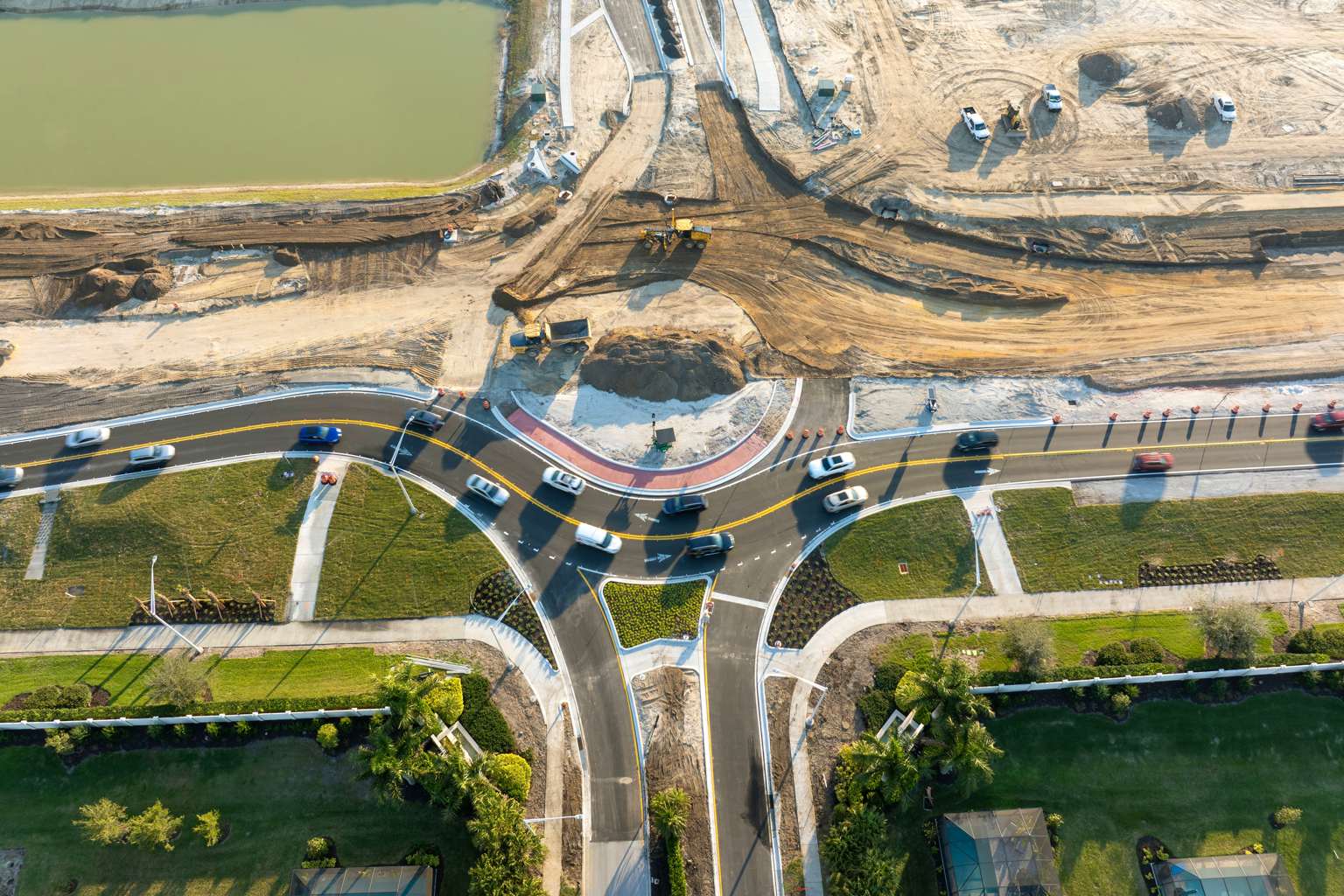
Intersections have long been a source of frustration and danger for drivers across America. But a quiet revolution is underway, poised to change how we navigate these tricky junctions. Say goodbye to traditional roundabouts and hello to a smarter system designed to improve safety, reduce accidents, and keep traffic flowing smoothly on busy roads.
Why traditional roundabouts aren’t always the best option
Roundabouts have been celebrated for easing traffic and cutting down severe collisions, yet they aren’t a one-size-fits-all solution. Large traffic circles can slow down main roads and sometimes create bottlenecks instead of clearing congestion. Building overpasses, though effective, takes a significant toll on budgets and construction time. Meanwhile, smaller rural roads often feed directly onto major highways, resulting in dangerous speed mismatches and risky merging scenarios.
Take Argentina as an example: crashes frequently occur when vehicles enter or exit highways from secondary routes. Drivers either accelerate abruptly to merge or slow suddenly to exit, producing unpredictable speed differences that lead to collisions. Clearly, a more innovative intersection design is crucial to enhancing road safety while maintaining traffic efficiency.
The innovation of RCUT intersections
Enter the Restricted Crossing U-Turn (RCUT), an intersection design gaining traction in the U.S. and Europe for its clever approach to eliminating hazardous left turns and cross-traffic conflicts. Unlike a traditional roundabout, an RCUT requires vehicles approaching from a side street to first turn right onto the main road. Then, after traveling a short distance—typically 0.3 to 0.8 miles—they execute a U-turn from a designated lane to continue on their intended route.
If the driver’s goal is simply to cross the highway, they make another right turn after completing the U-turn maneuver. This design essentially elongates the intersection, providing a smoother and safer traffic flow without interrupting the main road’s velocity or capacity. It’s a strategic trade-off that minimizes accident potential by removing the most collision-prone movements.
“By redesigning intersections to remove conflict points, RCUTs significantly enhance traffic safety,” explains traffic engineer Dr. Lisa Nguyen in a 2024 Federal Highway Administration report.
Proven safety improvements and traffic efficiency
The deadliest movements at intersections are left turns and crossing traffic. RCUTs tackle these by redirecting drivers away from perpendicular crossings, substantially lowering crash risk. According to the Federal Highway Administration, implementing RCUTs can reduce total crashes by up to 54% and crashes involving injuries by as much as 70%.
Beyond safety, RCUT intersections help reduce congestion and wait times. Since vehicles no longer cross directly in front of oncoming traffic, drivers on the main road don’t have to stop or slow dramatically. Cities in North America report fewer rush-hour delays after switching to this model, making the roads more efficient during peak periods.
Challenges in adoption and cultural adjustment
While the RCUT design offers clear benefits, implementation isn’t without hurdles. Proper signage and driver education are essential to prevent confusion about the unusual requirement to turn right before completing a U-turn. Without clear communication, drivers might find the system counterintuitive, potentially offsetting its safety advantages.
Cultural resistance also plays a role. Areas accustomed to roundabouts might hesitate to embrace RCUTs due to unfamiliarity. In Argentina, for instance, many highways exhibit partial right-turn patterns resembling RCUTs, but limited infrastructure and outdated designs can force drivers into unsafe merges. The full RCUT model solves this by providing dedicated lanes for U-turns right at the intersection, significantly reducing collision odds.
From personal experience, navigating an RCUT intersection felt surprisingly natural even at highway speeds, contrasting sharply with the tension of waiting for a protected left turn at a traditional junction. This seamless flow demonstrates how thoughtful design can not only save time but truly save lives on the road.
The future of intersection design in America
RCUT intersections mark a transformative chapter in traffic engineering. As urban centers grow and roadways become increasingly congested, smart, data-driven solutions like RCUTs offer a promising path forward. Given their strong track record for enhancing safety and efficiency, we can expect more states and cities to integrate these designs into their infrastructure.
For drivers, adapting to the right-turn-first, U-turn method will take some getting used to, but the payoff is significant: fewer crashes, less time spent idling, and a more confident driving experience overall. Embracing this new style of intersection could turn out to be one of the most impactful changes in road safety in recent years.
What do you think about RCUT intersections? Have you encountered one yet, and how did it feel? Share your stories, questions, or suggestions below — your insight could help others navigate these evolving roadways safely. Don’t forget to share this article with friends interested in traffic safety and innovative driving solutions—they’ll appreciate the heads-up!
1 Comment
RCUT’s have been a thing in Michigan for a long time. I have always heard them being called Michigan lefts. I like them and wish more places had them.