


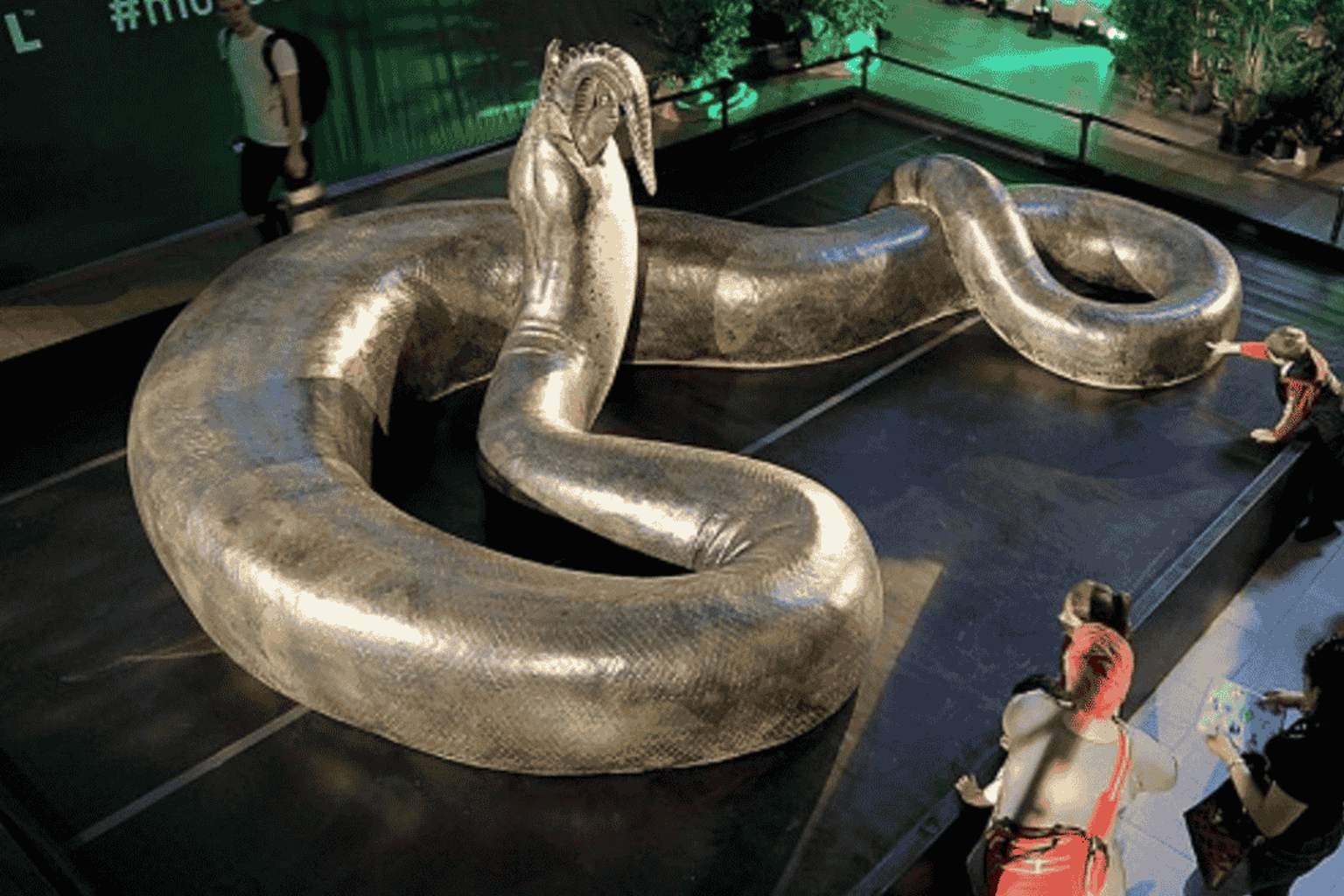
Imagine a snake so enormous that today’s largest anacondas seem like mere garden snakes in comparison. Meet the Titanoboa cerrejonensis, the prehistoric giant that slithered Earth more than 58 million years ago — a true behemoth of the ancient world. Its discovery has not only captivated scientists but also revolutionized our understanding of prehistoric life and global climate history.
Meet Titanoboa: The largest snake ever discovered
Titanoboa is officially recognized as the largest and heaviest snake known to science. Surpassing even the green anaconda, which previously held this record, Titanoboa could grow up to a staggering 42 to 46 feet long—about the length of a typical school bus—and weigh over a ton, outweighing most compact cars. Before scientists uncovered its fossils in 2009 near the Cerrejón coal mine in Colombia, the existence of such a colossal serpent was purely speculative.
This massive snake lived during the Paleocene epoch, just after the extinction of the dinosaurs, in a time when tropical rainforests flourished in what is now northern South America. As a cold-blooded reptile, Titanoboa thrived in a hot and humid climate, relying on the warmth of the environment to sustain its gigantic frame.
The Paleocene epoch: A world waking up from extinction
The Paleocene period, spanning roughly 58 to 60 million years ago, was a critical era in Earth’s history. This epoch marked the planet’s recovery after the catastrophic mass extinction that wiped out the dinosaurs. Tropical ecosystems, such as the lush rainforests covering the Cerrejón region, became hotbeds of new life. It was in these steamy, swampy environments that Titanoboa ruled as the apex predator.
Researchers have determined that the region’s temperature remained consistently between 86°F and 93°F, ideal conditions for sustaining huge reptiles like Titanoboa. This discovery, noted by paleontologists studying the area, provides vital clues about how Earth’s climate shaped and supported prehistoric fauna.
“Titanoboa’s massive size offers a unique window into Paleocene climates. It suggests that tropical temperatures were considerably higher than today,” says Dr. Carlos Jaramillo, lead researcher from the Smithsonian Tropical Research Institute.
Smithsonian Magazine on the discovery of Titanoboa
A giant hunter in water: Titanoboa’s lifestyle and diet
Despite its enormous size, Titanoboa was a non-venomous constrictor. Like its modern relatives—the boas and pythons—it subdued prey by wrapping its muscular body around them until suffocation. Once its prey was lifeless, Titanoboa would swallow it whole, head first, leveraging its flexible jaw and stretchy skin.
Early assumptions held that Titanoboa preyed on large terrestrial animals or crocodile-sized reptiles. However, new fossil evidence suggests otherwise. The snake’s skull fragments revealed loosely attached teeth designed for gripping slippery prey, indicating a primarily aquatic lifestyle. This anatomical detail surprised many experts, shifting the understanding of Titanoboa’s diet primarily towards massive prehistoric fish found in Paleocene rivers and lagoons.
Here is a fascinating video that recreates Titanoboa’s habitat and hunting strategies, giving a vivid picture of how this giant serpent navigated its watery domain:
The broader impact: What Titanoboa teaches us about evolution and climate
Titanoboa’s discovery changed our understanding of life after the dinosaurs and gave researchers a tangible link to ancient climate conditions. Its sheer size and biology indicate warmer global temperatures in the aftermath of the mass extinction event. This aligns with climate models showing elevated Paleocene tropical heat and aids scientists in reconstructing Earth’s climatic past.
Beyond the scientific realm, Titanoboa has become a symbol for how species can adapt and dominate after catastrophic events. It provides key insights into how life rebounds and evolves under extreme conditions, underscoring the complexity of prehistoric ecosystems.
According to a 2017 National Geographic report, “Titanoboa’s remains have become crucial in tracing the Earth’s ancient environment, revealing that higher global temperatures once allowed reptiles to grow much larger than today’s species.”
Dr. Jaramillo adds, “Studying Titanoboa not only helps us understand past ecosystems but also offers a lens to appreciate how current climate trends might impact wildlife in the future.”
Do you find prehistoric giants like Titanoboa fascinating? How do you think they shaped the ecosystems of their time? Share your thoughts, questions, or favorite dinosaur-era creatures in the comments below. Let’s keep the conversation about Earth’s incredible prehistoric past alive!