


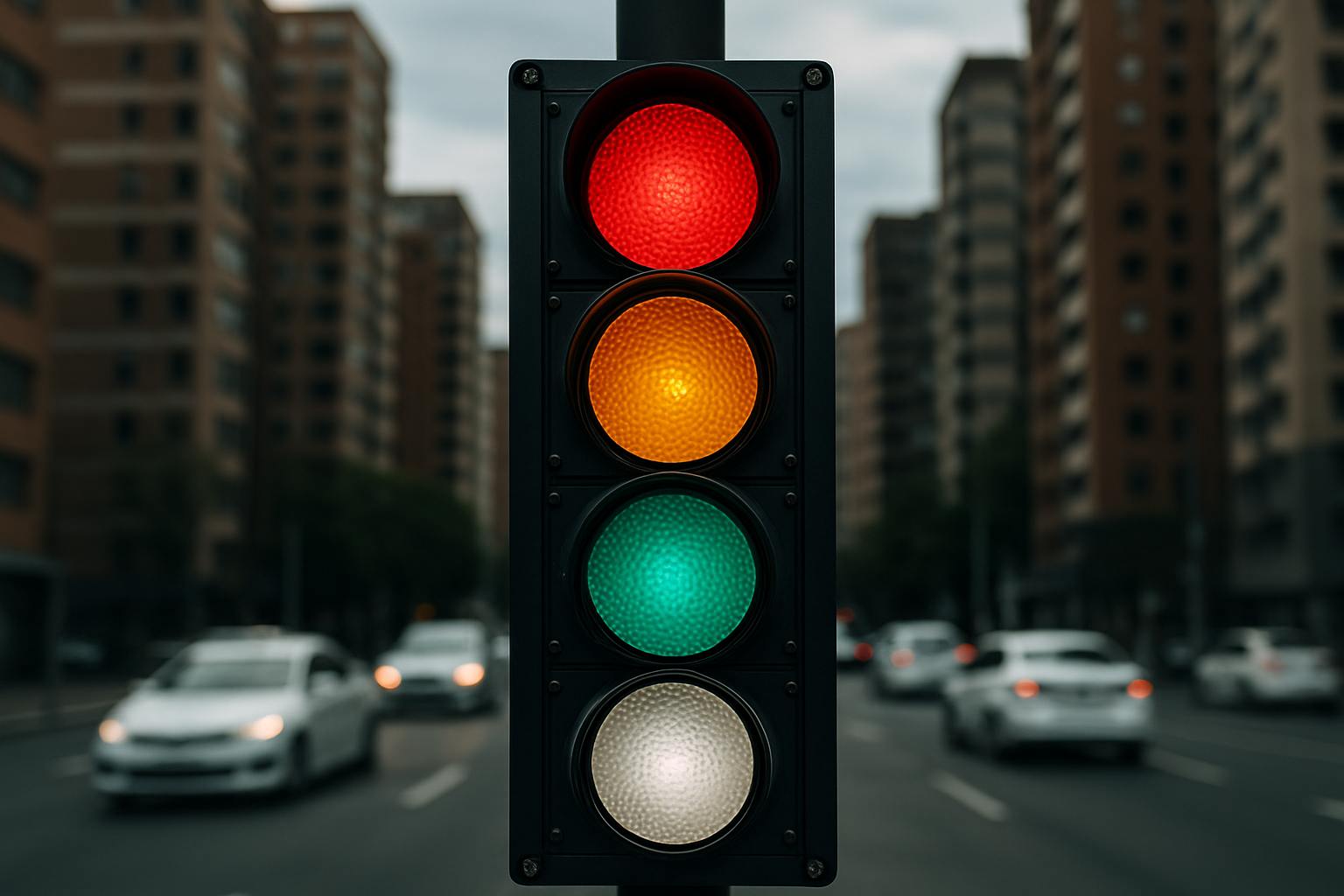
Traffic lights have long been the backbone of road safety, guiding drivers with the simple colors of red, yellow, and green. But traffic control as we know it is on the brink of a revolutionary upgrade. Researchers at North Carolina State University (NC State) have confirmed that traffic lights with four colors including a new white light are coming—and they promise to transform how we drive forever.
Imagine intersections where vehicles and traffic signals communicate seamlessly, optimizing traffic flow in real time. This bold innovation doesn’t replace any current light but adds an extra layer of intelligence designed to keep traffic moving faster and safer, especially as autonomous cars become more prevalent. Let’s explore how this new white light works, why it matters, and what it could mean for all of us on the road.
The introduction of the white light
The key to this upcoming change is the fourth traffic light color: white. This isn’t just a random addition. The white light serves a special role to indicate when an intersection is under the control of autonomous vehicles communicating with the traffic system.
Today, traffic lights simply instruct drivers when to stop, prepare to stop, or go. But with the rise of self-driving cars, these vehicles can talk to each other and the traffic lights to more precisely manage traffic flows. When enough autonomous vehicles gather near an intersection, the white light turns on. This means that human drivers behind these autonomous cars don’t need to make split-second decisions—they follow the lead cars that are automatically coordinating their movements.
The traditional red, yellow, and green lights will remain fully functional. The white light will only appear when the majority of cars in the area are autonomous and communicating, signaling a new era of smart intersection management.
How the white light system operates
At the heart of this system is a technology called distributed computing. This allows traffic lights and autonomous cars to exchange information in real time, adapting traffic signals dynamically.
Here’s how it works: as autonomous vehicles approach an intersection, they communicate among themselves and with the traffic lights. When a sufficient number are detected, the white light activates, taking over traditional traffic rules with a cooperative traffic flow controlled by software algorithms.
But if the number of autonomous vehicles falls below a certain threshold, the white light switches off and the system reverts to the traditional three-color mode. This hybrid approach ensures that traffic systems remain flexible and efficient regardless of autonomous vehicle penetration.
Why adding a fourth color matters for traffic efficiency
According to NC State researchers, the white light could dramatically reduce traffic congestion and delays. Even with only 10% of cars being autonomous, delays could drop by approximately 3%. When a majority of vehicles are autonomous, studies anticipate delays could plummet by as much as 94%.
This has profound implications. Less time idling at red lights means reduced fuel consumption and lower vehicle emissions, contributing positively to city air quality. Moreover, this system could boost safety by clearly signaling to drivers when cars are autonomously coordinating traffic, decreasing the likelihood of human error during busy intersections.
Dr. Anuj Mubayi, the lead researcher at NC State, explained in a 2023 report: “The white light represents a transition point between human-controlled and machine-coordinated traffic flow. It acts as a trust signal for drivers to rely on autonomous vehicle behavior, promoting smoother and safer roads” (NC State News).
Where and when will this new system be tested?
NC State is preparing for the first real-world tests of this groundbreaking system in controlled environments where autonomous vehicles already operate regularly.
Ports are an ideal testing ground due to dense vehicular activity, predictable vehicle movements, and minimal pedestrian disruptions. These conditions allow researchers to closely monitor and refine the interactions between the white light system and autonomous vehicles.
While white was chosen for its high visibility and simplicity, scientists remain open to using another easily recognizable color if it proves more effective in field trials. The essential criterion is a color that clearly signals the switch to autonomous coordination without causing confusion.
This innovation heralds a future where human drivers and smart cars share the road as collaborators rather than competitors. Instead of relying solely on color-coded lights, cars will use communication networks to govern intersections dynamically, boosting safety, efficiency, and sustainability.
“Traffic managed by connected autonomous vehicles has the potential to drastically lower congestion and greenhouse gas emissions,” said transportation expert Dr. Lisa Nguyen in a 2024 analysis published by the International Transport Forum.
As this new technology develops, it’s important for all drivers to stay informed about changes that could affect road safety and traffic patterns. Will you embrace this evolution on the road? Share your thoughts and experiences—let’s start the conversation about the future of driving!