


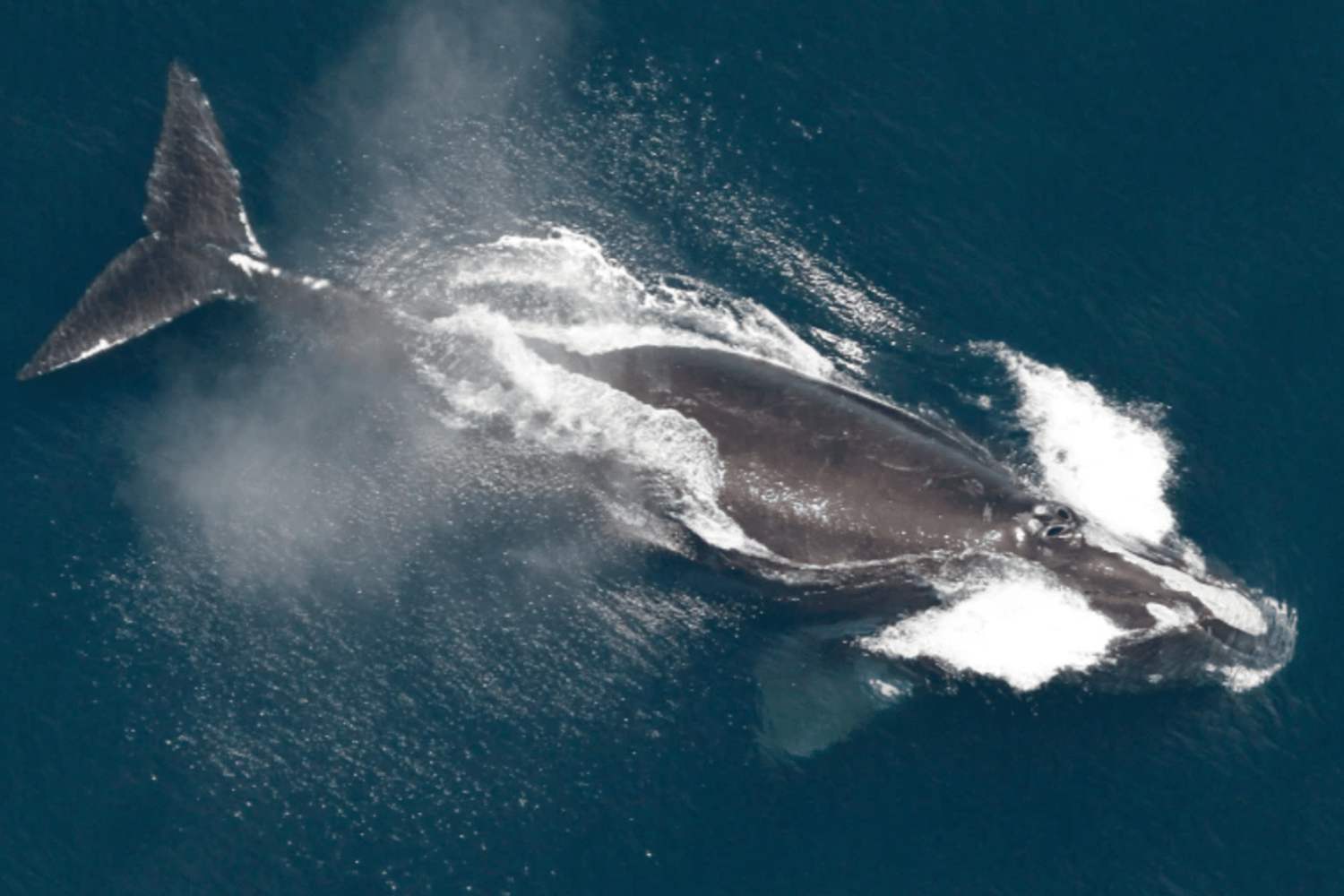
One of the rarest whales on the planet is stirring hope across the oceans. The North Atlantic right whale, a species once perilously close to extinction, is now showing signs of a tentative comeback. After decades of struggle against human threats, a recent increase in their numbers is sparking cautious optimism—yet the road to recovery remains fragile and demands unwavering conservation commitment.
The north Atlantic right whale: from near extinction to hopeful signs
Once abundant along the eastern coastline of North America, the North Atlantic right whale population plummeted during the heyday of commercial whaling, when these majestic creatures were hunted relentlessly. By the 20th century, their numbers had sunk so low that extinction seemed inevitable. Despite decades under legal protection in the U.S. and Canada, these whales continue to confront grave dangers such as ship collisions and fishing gear entanglement.
A recent report from the North Atlantic Right Whale Consortium reveals a heartening development: the population has grown by eight individuals, now estimated at approximately 384 whales. This modest increase, covered by AP News, marks the first hopeful sign after years of decline. However, experts warn the species remains critically endangered without sustained protective measures.
Conservation efforts begin to turn the tide
The past decade saw the North Atlantic right whale population shrink by nearly 25%, demonstrating how perilous their situation was. But from 2020 to 2024, biologists noted an encouraging 7% population increase, suggesting that recent conservation initiatives might finally be bearing fruit.

Key to this rise are improved regulations in Canadian waters, especially in the Gulf of St. Lawrence, where authorities have imposed stricter measures to reduce ship strikes and fishing gear entanglements. Philip Hamilton, senior scientist at the New England Aquarium’s Anderson Cabot Center for Ocean Life, explained, “A modest increase every year, if we can sustain it, will lead to population growth.”
This progress highlights how continuous and adaptive conservation efforts are essential to reversing the whales’ decline. Every year of sustained improvement is a building block towards recovery, yet any neglect could swiftly erase these gains.
New calves bring a much-needed ray of hope
A vital sign of population health lies in reproduction, and recent data offers encouraging news. Four first-time mothers gave birth, and in total 11 calves were recorded this year. While still below ideal levels, this uptick in new births is a positive change compared to previous years of alarmingly low reproduction.
Heather Pettis, leader of the right whale research program at the Cabot Center and chair of the North Atlantic Right Whale Consortium, noted, “The slight increase in population, coupled with no detected mortalities and fewer injuries, leaves us cautiously optimistic.” Yet she also stressed that the population can “turn on a dime,” reminding us how sensitive these whales are to both environmental and human pressures.
Legal protections remain critical in an uncertain future
Despite these promising developments, the North Atlantic right whale’s survival still hangs in the balance. Environmental advocacy groups like Oceana have raised alarms over recent efforts to weaken the Marine Mammal Protection Act. Gib Brogan, senior campaign director at Oceana, insisted, “Continued attacks on the Marine Mammal Protection Act and efforts to weaken NOAA’s science-based safeguards put this fragile population at even greater risk.”
This legislation has been key to slowing the whales’ decline. Any rollback threatens to unravel decades of progress—especially as the whales’ migration patterns are shifting due to warming ocean waters. These changes push whales into less protected areas, increasing their exposure to threats.
A 2023 evaluation by the National Academies of Sciences, Engineering, and Medicine underscores this urgent reality, emphasizing the need for stronger, adaptive management strategies to address evolving environmental challenges.
Why the right whale’s fate matters to us all
As a senior editor specializing in environmental reporting, I’ve witnessed firsthand how delicate conservation success can be. The North Atlantic right whale’s story is a poignant example of nature’s resilience when humans act responsibly—and a warning of the consequences if we fail.
Their slow but meaningful population growth demonstrates the power of science-driven policies and steadfast public support. Protecting these whales means safeguarding entire marine ecosystems vital for biodiversity, fisheries, and climate regulation.
We invite you to join the conversation. How do you feel about the effort to save the North Atlantic right whale? Share your thoughts and experiences below, and please help spread awareness by sharing this story with others passionate about ocean conservation. Together, we can make a difference.