


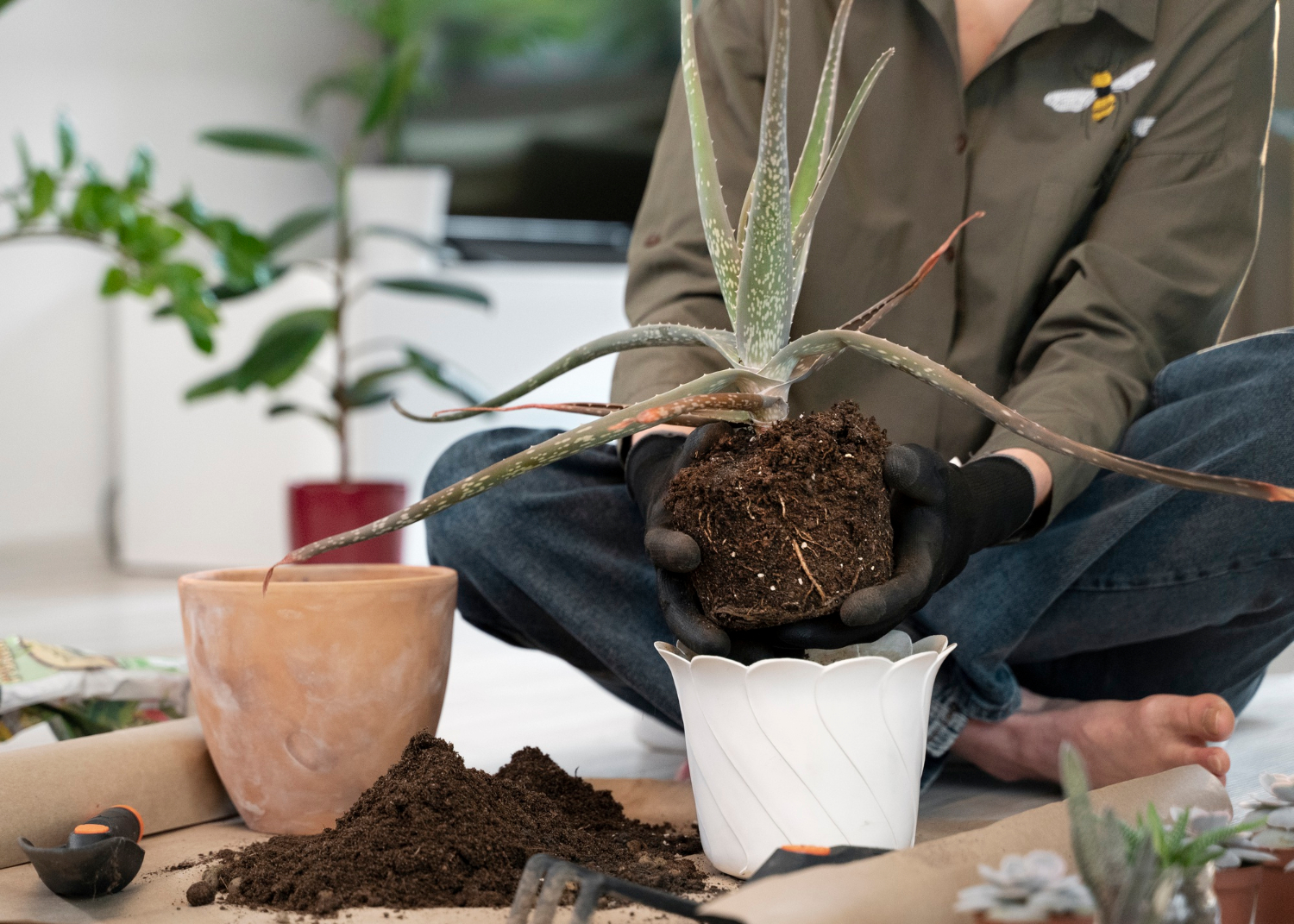
Repotting your plants might seem simple, but it’s a crucial step that can make all the difference in their health and growth. Over time, the soil loses its essential nutrients, and the roots can get cramped, making your plant struggle. Knowing how to repot plants the right way ensures they thrive, stay vibrant, and keep bringing life to your space.
Here’s a warm, straightforward guide to help you give your plants a fresh start.
Why repotting is essential for your plants
Most potted plants will benefit from being repotted regularly, but many people don’t realize how often or why it’s necessary. When the original soil starts to lose its nutritional properties, the plant isn’t getting the food it needs. Also, as the plant grows, its roots spread and often begin to circle the pot’s edge or peek through the drainage holes. This root crowding, called being root-bound, can stunt the plant’s growth.
Some plants require repotting every year, while others can wait longer. The best time to repot is during the warmer months—typically spring or summer—when your plant is actively growing and can easily adapt to change.
How to prepare your plant before repotting
One helpful tip is to water your plant thoroughly the day before repotting. This softens the soil, making it easier to remove from the old pot without damaging the delicate roots.
A well-watered plant adjusts better to a new environment, reducing stress caused by relocating to fresh soil. I still remember the disappointment after repotting a small philodendron without watering first—it perked up only after a few days once I realized the roots had dried out too much.
Choosing the right new pot for your plant
When selecting a new pot, pick one about 2 inches wider in diameter than the current one. A just-right size helps your plant’s roots spread naturally while avoiding excess water retention that can cause problems.
Make sure to thoroughly clean and dry the new pot. Start by filling the bottom with some fresh potting soil—this provides a fresh foundation for healthy root growth.
Removing your plant safely from its old pot
The key here is patience and gentleness. Support the plant’s foliage with one hand and carefully invert the pot. Tap the bottom to loosen the root ball.
If it’s hard to remove, watering again or peeling off some of the top old soil can help lighten the load. After the plant is out, gently remove any loose old soil not tightly attached to the roots.
If you notice roots growing through the drainage holes, don’t cut or damage them. I once accidentally clipped these tiny roots and my peace lily took weeks to recover. If your pot is plastic, trimming the pot’s bottom can release those roots without harm.
How to repot your plant properly
Position the plant in its new pot, making sure it sits comfortably on the fresh soil at the bottom. Surround the roots with new potting mix, patting it lightly but thoroughly to fill all spaces without compressing it too much.
Smoothing the soil surface with a spoon or your fingers helps keep the surface even and tidy.
Watering and aftercare after repotting
Once the plant is in place, water it generously. Water will flow out through the drainage holes, flushing away loose soil and helping the roots settle in.
Clean any soil residues off the pot’s outside for a neat finish, then let your plant rest for a while before moving it back to its usual spot.
Now your plant has fresh room and nutrients to grow strong. Keep an eye on its health, and whenever the roots start crowding again, it’s time to repeat the process.
Repotting can feel intimidating at first, but it’s truly rewarding to see your plants thrive after the change. Have you had memorable successes or funny fails when repotting your plants? Share your tips and stories in the comments. Let’s grow our plant knowledge together!